Structural Drying and Dehumidification in Flower Mound, TX
Once the water is out, the moisture inside framing, subfloors and walls still has to leave. Air movers and dehumidifiers are sized to each room, then daily readings show when every material is dry.
(888) 527-9134Flower Mound structural drying help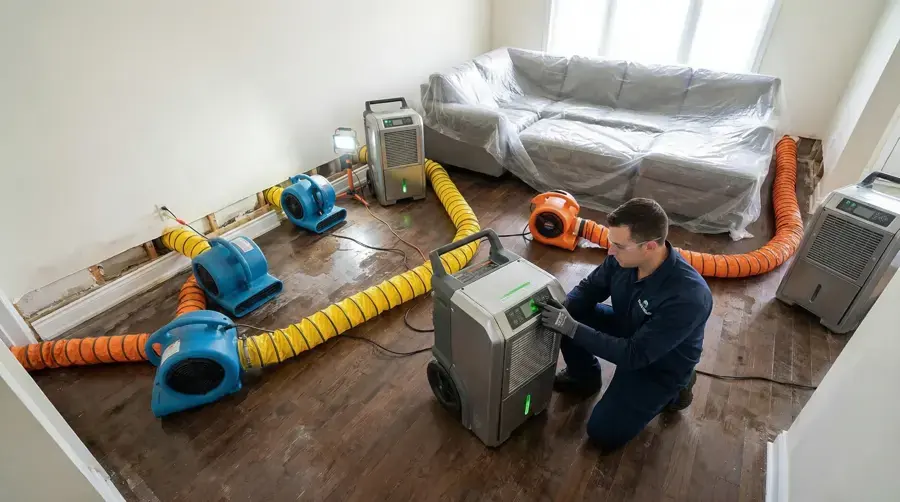
First steps for structural drying and dehumidification in Flower Mound, TX
- 01Survey the moisture Meters, a thermal camera and a hygrometer map what is wet and set a dry reference.
- 02Place the equipment Air movers and dehumidifiers go in sized to the room volume and the materials wet.
- 03Check and adjust Readings every visit show progress, and equipment is moved or added as the numbers change.
- 04Confirm dry When each material matches the dry reference, the equipment comes out and the log is delivered.
Extraction removes liquid water, but wet studs, subfloors and plaster hold far more moisture than they show, and that moisture causes swelling, odor and later damage if it stays. Structural drying moves it out through controlled airflow and dehumidification, whatever the home's age or finish.
What does structural drying and dehumidification cost in Flower Mound, TX?
Drying cost follows the number of rooms, the thickness of the materials and the equipment days they require, so a single room costs far less than hardwood, plaster or slab drying.
Single room, light moisture
- Air movers and an LGR unit
- A moisture reading every visit
- Written drying log
Several rooms, thicker materials
- Wall and ceiling cavities dried
- Several dehumidifiers running
- Psychrometric monitoring each visit
Dense hardwood, plaster or slab
- Desiccant or floor mat systems
- Longer equipment time
- Full drying log for the claim
These are typical ranges, not a quote. The water category, the wet square footage, the material class and how soon drying started move the final number most.
Run the water damage cost calculatorHow structural drying and dehumidification is handled in Flower Mound
Survey and map
Moisture meters, a thermal camera and a hygrometer chart the wet area, the dry reference and the air.
Open the cavities
Baseboards come off, wall cavities are vented or drilled, and loose wet materials are pulled for airflow.
Set and balance
Air movers and dehumidifiers are placed to move air across every wet surface without overdrying nearby materials.
Monitor and release
Daily readings steer adjustments, and the equipment is removed only after every material matches the dry reference.
How drying equipment is chosen
Each room is read, then equipment is matched to it.
- Air movers are aimed across floors and low walls to lift surface moisture.
- LGR dehumidifiers pull water from the air in most clean-water losses.
- Desiccant units handle dense materials and low-temperature conditions.
- Cavity systems push dry air inside walls and under cabinets.
Equipment is repositioned as the readings change, because a setup that is right on the first visit is rarely right on the third.
Reading the room, not guessing
Moisture meters check wood and drywall, thermal imaging shows cold wet areas, and a hygrometer records temperature and humidity so the crew can tell whether the room's air is taking water up or giving it back. Those numbers set the dehumidifier count and show when the setup needs to change.
A reference reading is taken from a dry area of the same material, and the wet materials are dried until they match it. Drying stops at that target, not at a calendar date or a hunch.
Hardwood, slab and plaster
Dense materials dry slowly and need patience: hardwood is dried with floor mats, plaster with warm controlled air, and concrete with desiccant units, since water extraction alone cannot remove what they hold.
- Wall cavities are drilled or vented so air reaches the studs.
- Ceiling sections are opened where insulation is wet.
- Wet carpet pad is removed since it cannot be dried efficiently.
Slab-specific drying is described on the slab leak page, and large flooded structures on the storm flood page.
Structural Drying and Dehumidification across Flower Mound and nearby cities
Drying equipment goes into homes across Wellington, Bridlewood, Canyon Falls, Chimney Rock and Stone Hill Farms, into apartments and condominium units at Lakeside DFW, and into shops and offices in the Lakeside Business District and the Denton Creek District.
The same service nearby: structural drying and dehumidification in Grapevine, Trophy Club, Southlake.
Water damage restoration in Flower MoundRelated water damage services in Flower Mound
Structural Drying and Dehumidification questions in Flower Mound, TX
Water still moving in Flower Mound?
A dry surface can hide wet framing. Describe the loss and the crew will explain how readings decide when drying is done.
(888) 527-9134 Flower Mound drying helpHow long does structural drying take?
It depends on the materials, how wet they got and the conditions in the room. Drywall and carpet dry sooner than hardwood or concrete, and the readings, not a fixed number of days, decide when the equipment leaves.
Why does drying equipment make the room warm and loud?
Dehumidifiers shed heat as they condense water, and air movers run constantly, so the room warms and gets noisy. Both help drying, and the heat speeds evaporation from wet materials.
Can doors and windows stay open during drying?
No. Open doors let humid outside air in, which slows the dehumidifiers, so the drying area is kept closed while the equipment runs. Interior doors may be propped to move air between connected rooms.
What does it mean when walls feel dry but read wet?
Surface dryness hides moisture inside the stud cavity, insulation or the back of the drywall. A meter reads the material itself, which is why readings, not touch, decide whether the wall is truly dry.
Does structural drying cost less than replacing materials?
Usually yes. Drying keeps flooring, framing and drywall in place when they can be saved, and it avoids the larger repair bill that follows if wet materials are sealed back up.
Dry it to a measured standard
Flower Mound homes and businesses get equipment sized to each room, daily readings and a written log that ends when the numbers match dry.
(888) 527-9134Call about drying equipment