Water Damage Restoration in Irving, TX
Crews extract standing water and dry the structure behind it, from Las Colinas offices and Valley Ranch homes to the older streets of South Irving, and log moisture readings until the walls are dry.
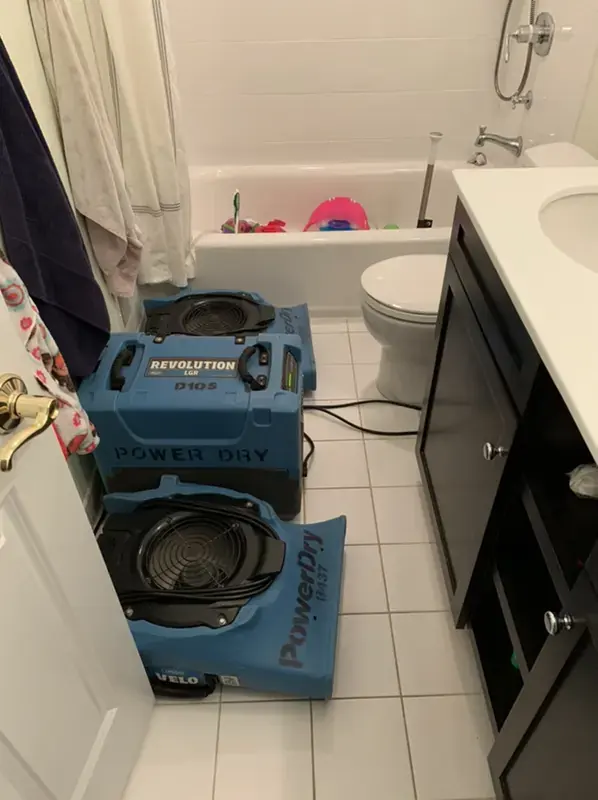
What the crews handle across the city
From a split supply pipe to a flooded garage, each service below has its own page with process steps and cost ranges.
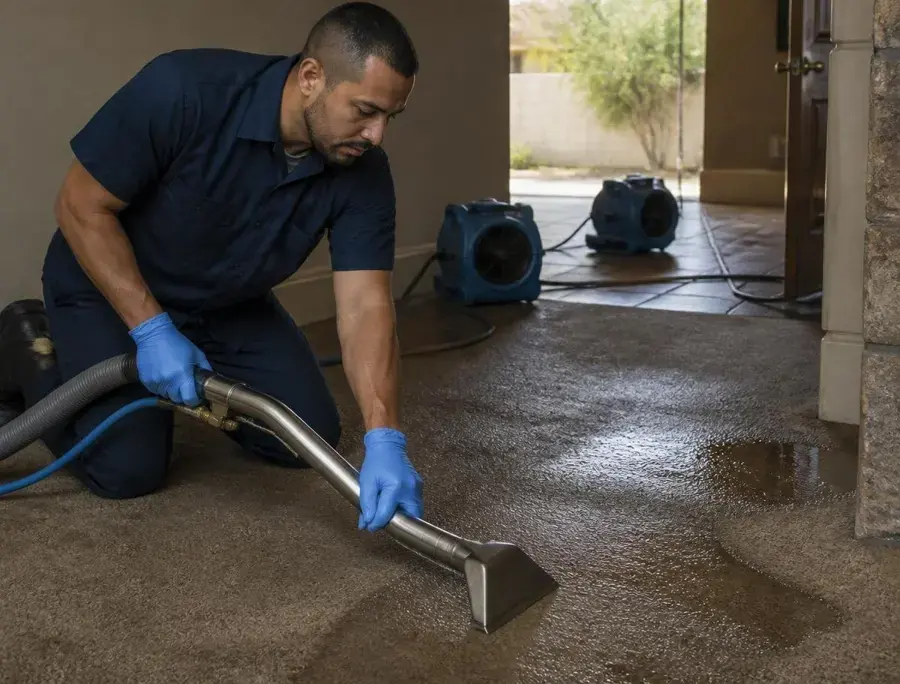
Water Extraction and Removal
Truck-mounted extractors pull standing water out of carpet, pad and hard floors.
See the service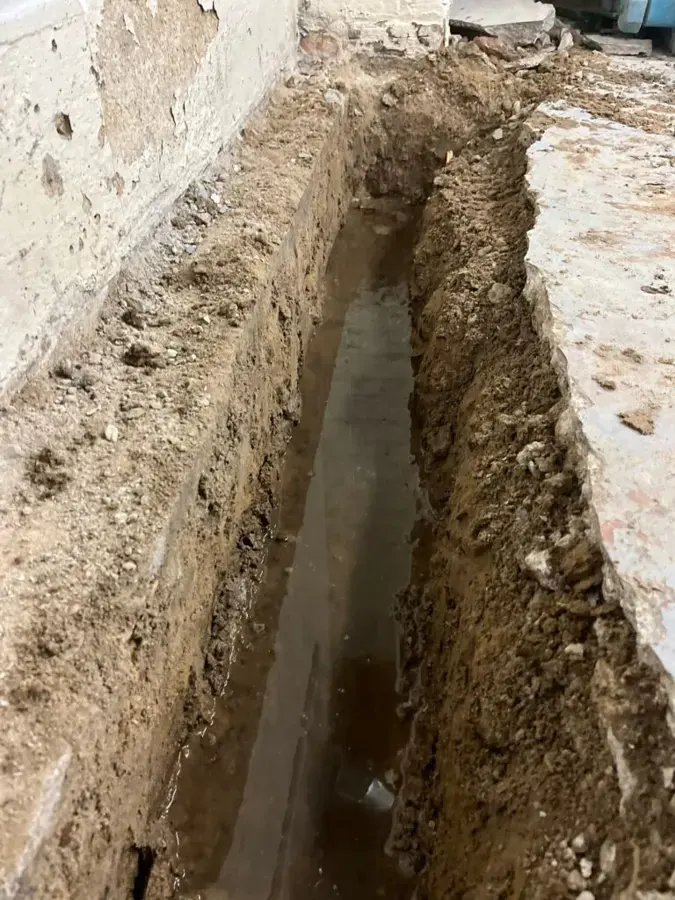
Slab Leak Water Damage
Leak detection, then lifted flooring and drying where a pipe has wet a concrete slab.
See the service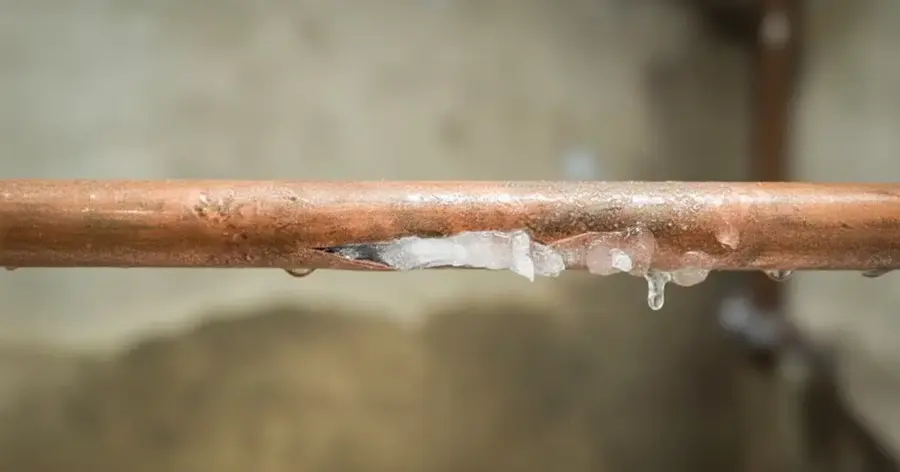
Frozen Pipe Water Damage
Split pipes after a cold snap: extraction, opened ceilings and wall cavities dried in place.
See the service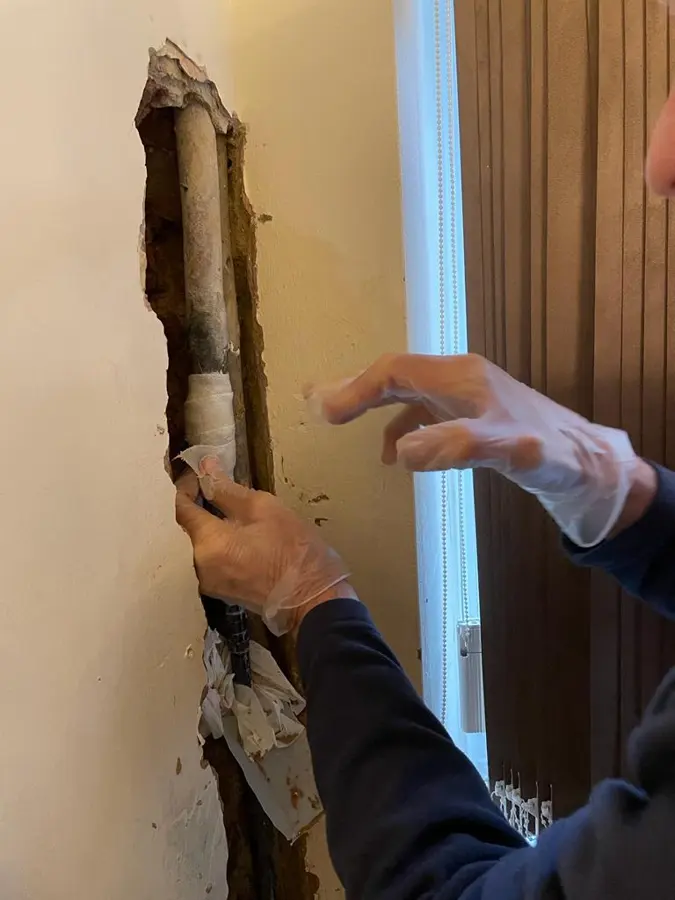
Burst Pipe Water Damage
A pipe that fails inside a wall or overhead gets opened, extracted and dried.
See the service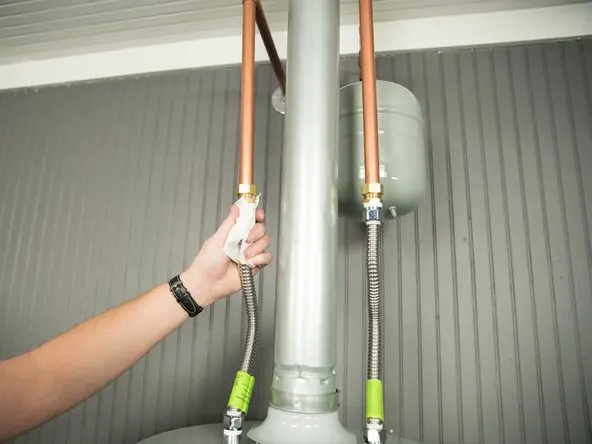
Water Heater Leak Cleanup
Tank leaks in garages, closets and attics, cleaned up and dried to the subfloor.
See the service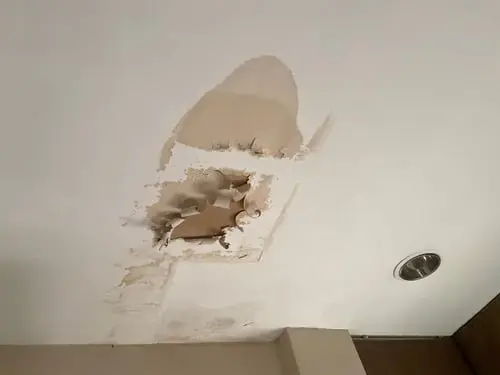
Ceiling Leak Water Damage
Stained or sagging ceilings traced to their source, opened where wet and dried.
See the service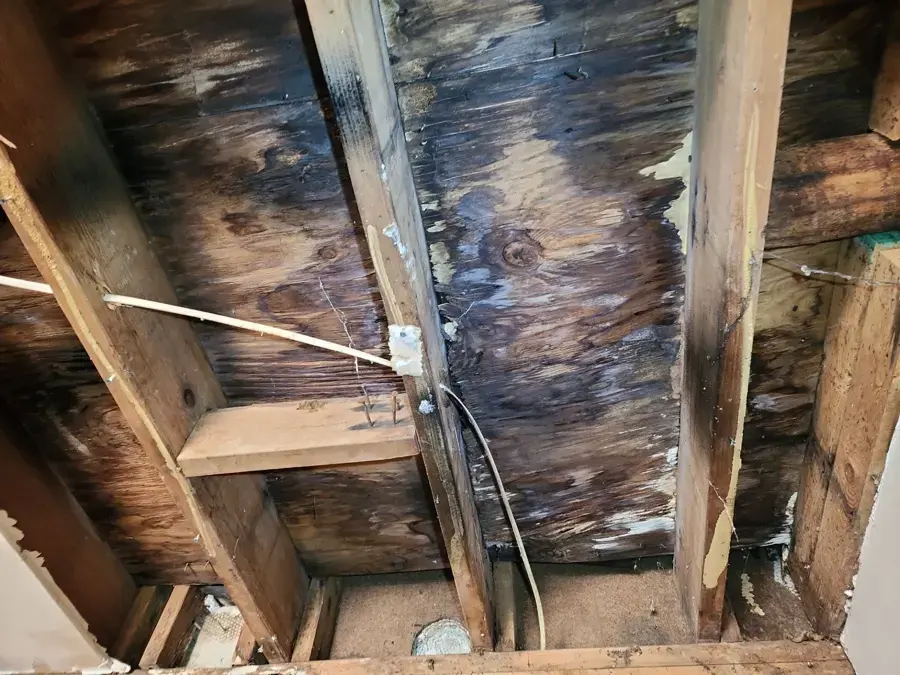
Roof Leak Water Damage
Rain that gets past the roof and soaks attic insulation, decking and ceilings below.
See the service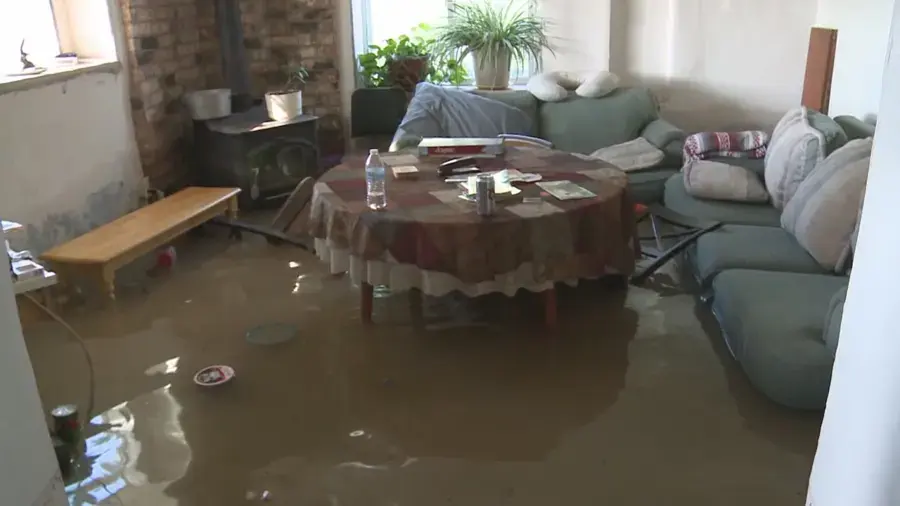
Storm and Flash Flood Cleanup
Flash flooding and rising runoff pumped out, with wet flooring and wall bottoms removed.
See the service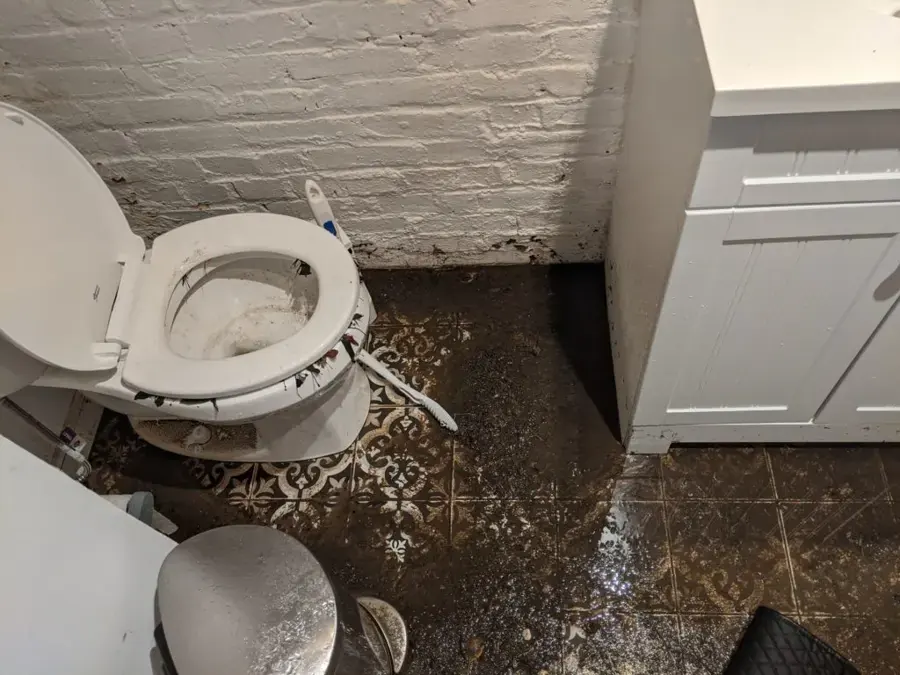
Sewage Backup Cleanup
Backups handled with containment, protective gear, removal of porous materials and treatment.
See the service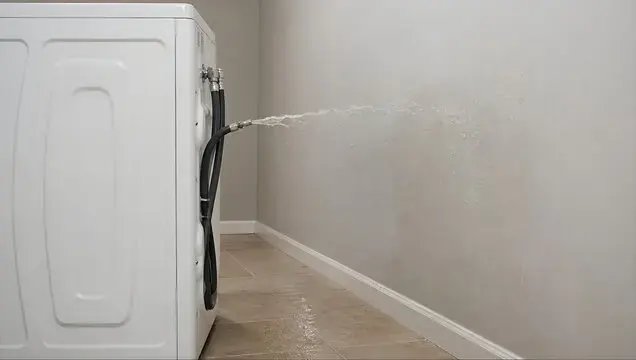
Appliance and Supply Hose Leaks
Washer, dishwasher and supply hose leaks that reach cabinets, flooring or a neighbor's unit.
See the service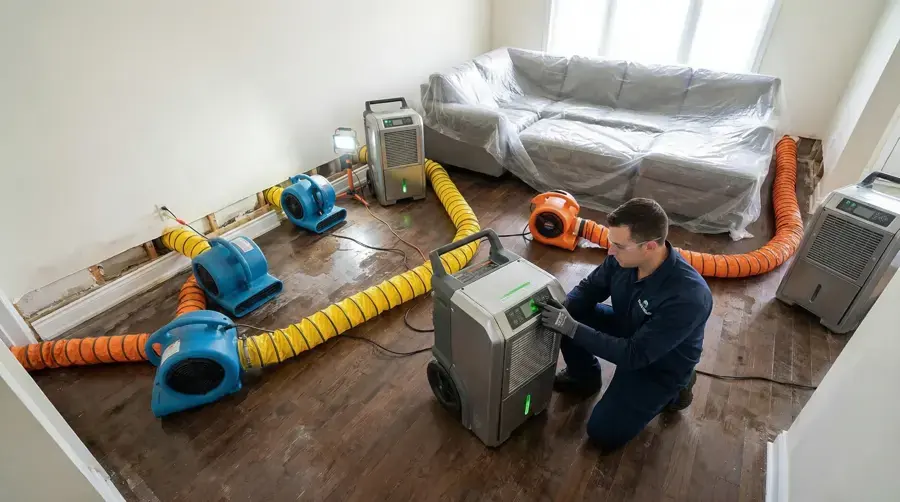
Structural Drying and Dehumidification
Air movers, dehumidifiers and daily readings until framing and subfloors reach normal.
See the service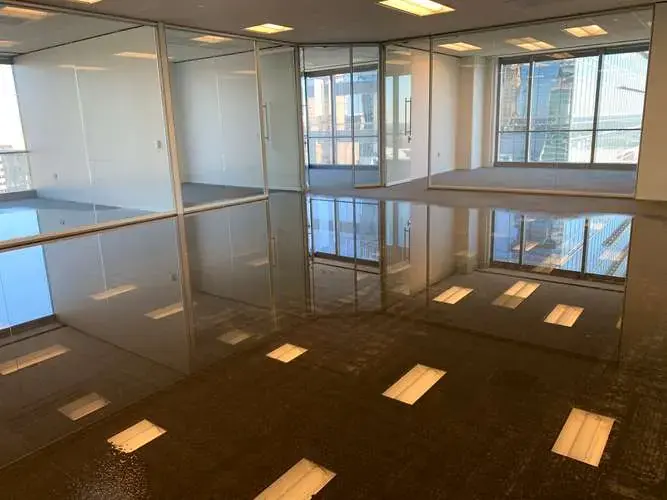
Commercial Water Damage
Suites, storefronts and full floors dried in phases so a business can keep operating.
See the serviceBuilt for a city of homes, apartments and offices
The city mixes houses, large apartment buildings and offices, so one water loss can involve a single tenant, a whole building or a business with a shared wall.
Calls answered day and night
Water does not wait for business hours, so extraction and drying work can begin whenever the call comes in.
Apartments and houses alike
Renters are the majority and roughly half of all units sit in larger buildings, so shared walls and floors are part of many jobs.
Documentation for the claim
Moisture maps, daily readings and photos are kept for the adjuster, so the drying record matches the work done.
Equipment sized to the job
Truck-mounted extractors, LGR dehumidifiers and air movers are matched to the room, the material and the amount of water, not set out by habit.
What water damage restoration usually costs here
Water damage in local homes ranges from about $1,200 for an early clean-water loss to $32,000+ for wide spread, and the gap comes from volume, time and what got wet.
Caught early, clean water
- Truck-mounted extraction and a moisture map
- Air movers and a dehumidifier
- Readings until the room is dry
Several rooms, soaked materials
- Wet carpet, pad and baseboards removed
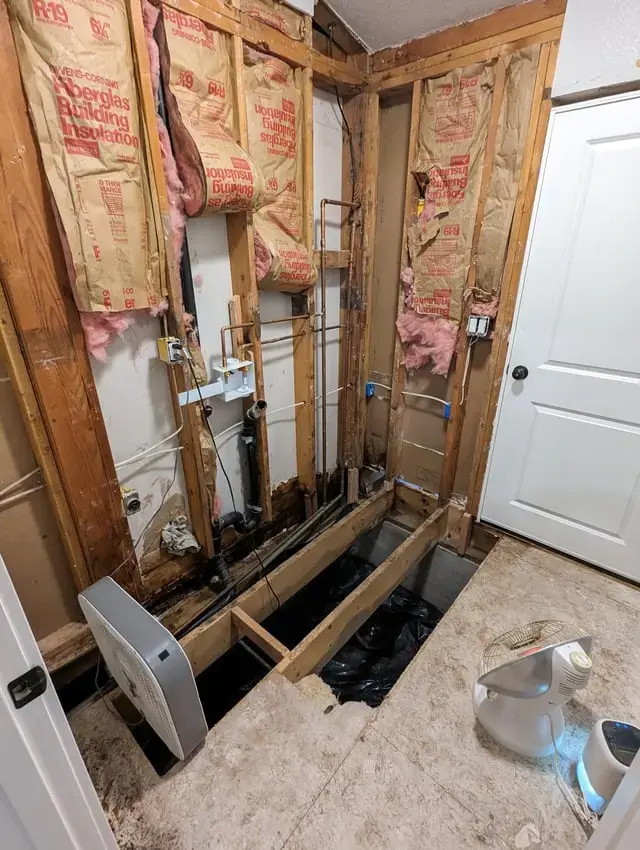
- Wall bottoms opened and dried
- Daily readings and photos
Wide spread or contaminated water
- Full-floor removal and containment
- Air scrubbers and antimicrobial treatment
- Complete drying log for the claim
These ranges are typical scopes, not a quote. The final number comes from a written scope after the moisture survey.
Run the water damage cost calculatorWhat a drying job looks like from start to finish
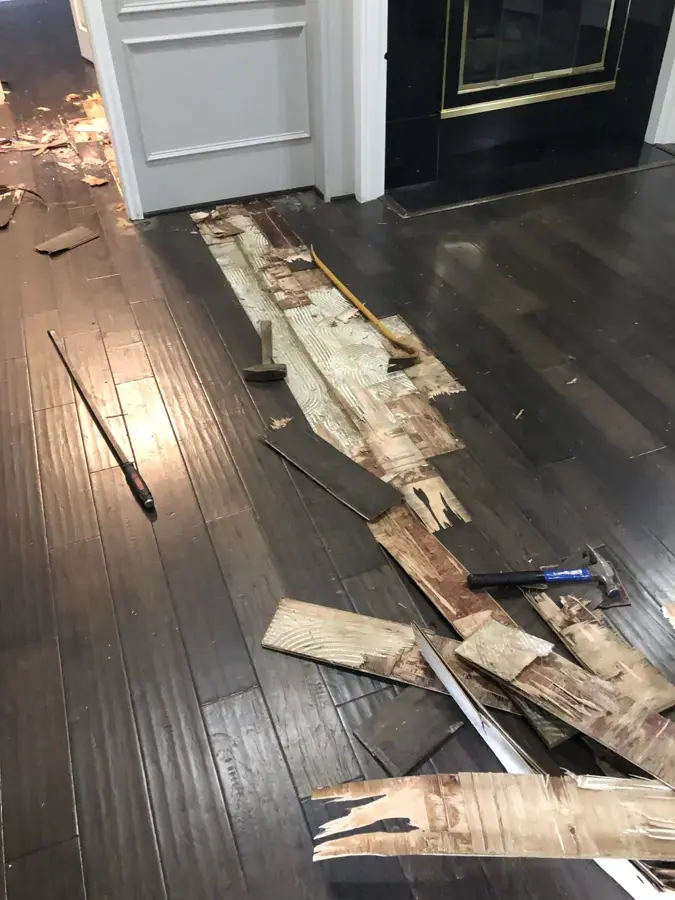
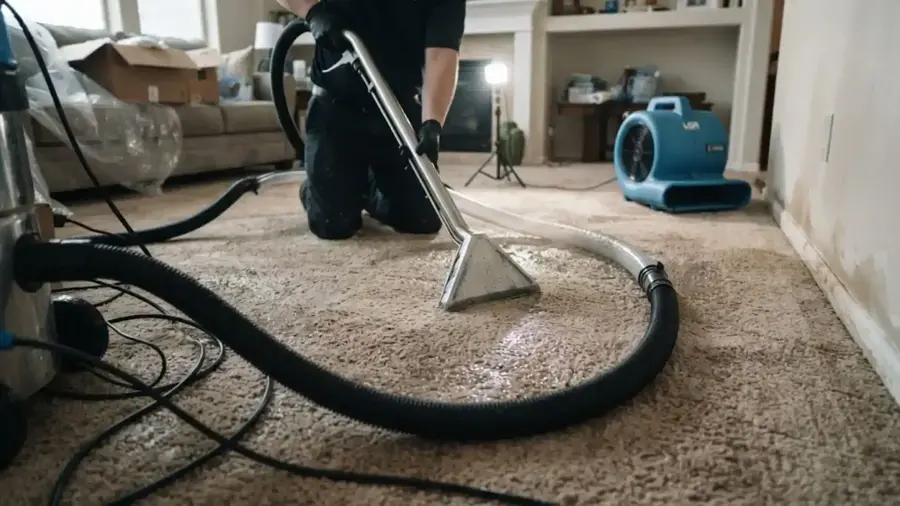
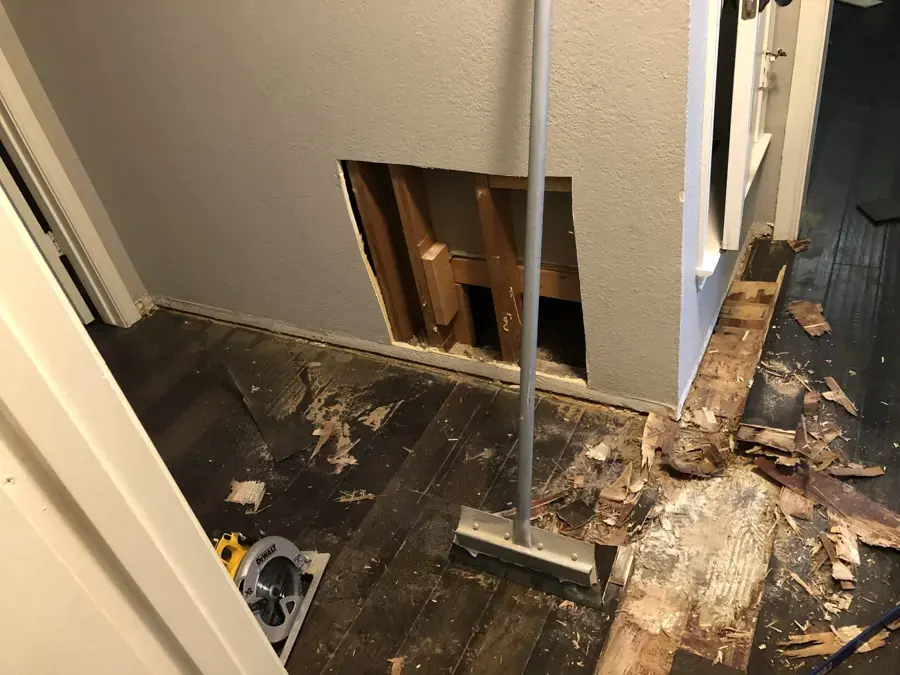
A drying job that follows the readings
Every job begins by working out how far the water traveled, then removes it, sizes the equipment to the materials and ends only when daily readings reach a dry standard.
Survey the damage
A moisture meter and thermal camera trace where water traveled, including under flooring and inside wall cavities, before anything is moved.
Extract standing water
Truck-mounted extractors and wands pull water from carpet, pad and hard floors, since every gallon left behind adds to the drying load.
Set the drying system
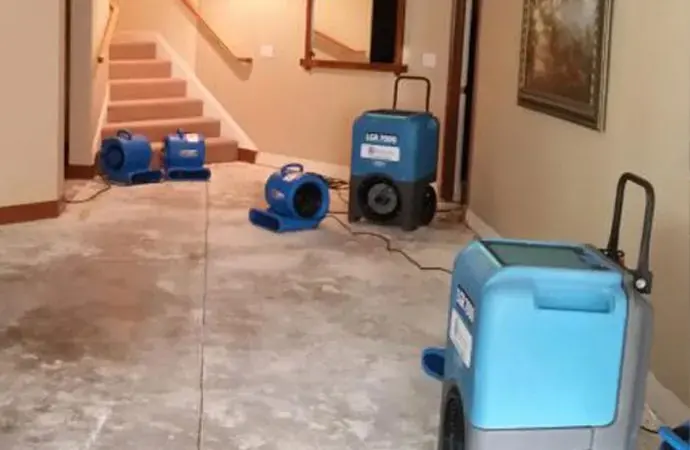
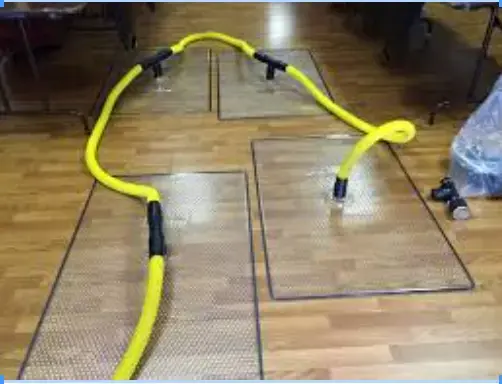
Air movers, LGR dehumidifiers and, for dense materials, desiccant units are placed by room volume and material, then adjusted as readings fall.
Verify and document
Readings are logged each visit and compared with a dry reference, and the final record is ready for the adjuster or property manager.
What an insurance claim needs
Many policies respond to sudden water losses, so careful records from the start help a claim move smoothly.
- Dated photos of the water, the source and every affected room
- Moisture readings with dates for each material that was measured
- The plumber's or roofer's repair record showing the source was fixed
- A written scope listing what was removed and why it came out
- An itemized list of damaged contents, flooring and fixtures
What the property owner handles
The policyholder files the claim and speaks with the adjuster. The restoration crew supplies the drying record and photos but does not decide coverage or approve payment.
Tenants should also tell the landlord or property manager right away, since building policies and renter policies differ.
Gear brought to a water loss
- Truck-mounted extractors. Truck-powered vacuum pulls water from carpet, pad and hard floors faster than portable units.
- LGR dehumidifiers. Low grain refrigerant units hold air dry enough to draw moisture out of framing, subfloors and drywall.
- Air movers. Directed airflow across wet floors and low walls speeds evaporation, and placement is moved as the readings change.
- Meters and thermal cameras. Moisture meters and thermal imaging confirm what the eye cannot see inside walls and under flooring.
Reaching a crew from any part of the city
Crews cover the full range of the city, from the planned communities of Las Colinas and Valley Ranch to the older eastern neighborhoods.
Apartment managers, homeowners and business owners can all start with a call describing the water source and the rooms affected.
Call about water in a buildingEmail for questions that can wait: contact@
Where crews work across the city
Neighborhoods and corridors
What to do before drying begins
- Stop the source Close the shutoff valve for the pipe or appliance, and switch off power to wet areas if it can be done safely.
- Protect belongings Lift furniture off wet carpet, move small items to dry rooms and set aside papers and electronics.
- Take photos first Photograph the water, the source and the damage before anything is moved, since those images support the claim.
- Skip the shop vacuum A household vacuum is not made for standing water and can create a shock risk.
- Call for a crew. Describe the source, the rooms affected and any sewage or gray water so the right equipment is ready.
Clean, gray and black water differ
A water's category, set by its source and age, decides what can be dried and what must come out.
Clean water sources
A split supply pipe or an overflowing sink starts as clean water, which can usually be extracted and dried in place when it is reached early.
See water extractionGray water from appliances
Washer, dishwasher and similar overflows carry soap and light contamination, so wet pad and porous materials are often removed rather than dried.
Read about appliance leaksBlack water and sewage
Sewage and floodwater carry bacteria, so affected porous materials come out, hard surfaces are cleaned and treated, and the area is contained.
Read about sewage backups
Where the water problems here come from
Local records show these risks, along with a few regional patterns.
- Homes decades old The American Community Survey lists 1987 as the median year homes were built, so the typical home is decades old and wear on plumbing, roofs and appliances adds up.
- Water between neighbors Roughly half of all housing units, 51,502, are in buildings of five or more, so a leak in one unit can reach the ceiling or floor of another.
- Creek drainage limits Engineers working with the city say the West Irving Creek drainage system cannot handle today's rainfall patterns, and a $115 million project deepens the channel and adds capacity.
- Heavy spring rain May is the wettest month on average, and the Elm Fork overflowed after heavy rain in 2015, so spring storms are when roofs, garages and low areas take on water.
- Storm overloads on sewers In November 2018 heavy rain covered manholes and overloaded wastewater pipes, causing two overflows, and the city's service request page lists a backup as a call to make immediately.
Main break, June 2016. On June 1, 2016, a water main installed in 1961 burst under the Finley water tower in Irving, and about 2 million gallons flooded the Newport Apartments and nearby vehicles. Old pipe fails without warning.
Water damage questions from owners
Water in the building right now?
Describe the source, the rooms and the water type, and a crew can plan extraction and the drying equipment.
(888) 527-9134 Call about the water nowHow fast does water damage spread inside a home?
Water moves into drywall, baseboards and subfloor material quickly, and wet materials start to swell or degrade within a day or two, so starting extraction early limits what has to be torn out and how long drying takes.
Does insurance cover water damage in Irving?
Many policies cover sudden losses such as a burst pipe or a failed supply hose, while gradual leaks, maintenance problems and flood from rising water are often treated differently. The policy wording and the adjuster decide, so reading the policy and filing promptly both matter.
What should a tenant do after a leak?
Tell the landlord or property manager right away, photograph the damage and move belongings out of the wet area. With about half of all units in larger buildings, water often reaches a neighbor, so quick notice helps everyone.
How is a sewage backup different from a clean leak?
Sewage carries bacteria, so porous materials such as carpet, pad and wet drywall are removed instead of dried, and hard surfaces are cleaned and treated inside containment. The city's service request page lists a wastewater backup as something to report by calling right away.
Are older neighborhoods more likely to have leaks?
Eastern parts of the city have older neighborhoods, and older construction usually means more wear on plumbing, roofs and appliances. Age alone is not a diagnosis, so a plumber's inspection confirms what failed.
Does storm water have to be removed or only dried?
Storm water that enters from outside is treated as contaminated because it crosses yards, streets and drains. Porous materials are usually removed, then the structure is cleaned and dried. After heavy spring rain in 2015, the Elm Fork overflowed and six parks were still closed in July.
Do businesses get a different drying process?
Businesses dry in phases so part of a suite or floor can stay open, with containment between zones and after-hours work where needed. Las Colinas alone is home to more than 2,000 companies, so work around tenants is a normal part of commercial drying.
How long does structural drying take?
Drying time depends on the materials and the amount of water, not on a fixed schedule. Dense materials such as hardwood and concrete dry slower than drywall, and equipment stays until readings match a dry reference.
Who handles a water main break near a property?
The Irving Water Utilities Department is the city's water utility and handles water main breaks, leaks and wastewater backups. Restoration crews dry the building and remove the water that got inside, which is a separate job.
Does the work include a drying record?
Yes. Moisture readings, equipment placement and photos are recorded at each visit, then compiled so the adjuster and property manager can see what was removed, what was dried and when the structure reached dry readings.
Standing water gets harder to fix every day
Whether the water came from a pipe, a roof or a backed-up drain, a short call describing the source and the rooms affected is enough for a crew to plan the work.
(888) 527-9134Speak with a drying crew