Water Damage Restoration in Southlake, TX
Around-the-clock water damage restoration for Southlake, TX. The extraction crew removes standing water, the drying team brings slab, framing and drywall back to a measured dry, and each reading lands in your claim file.
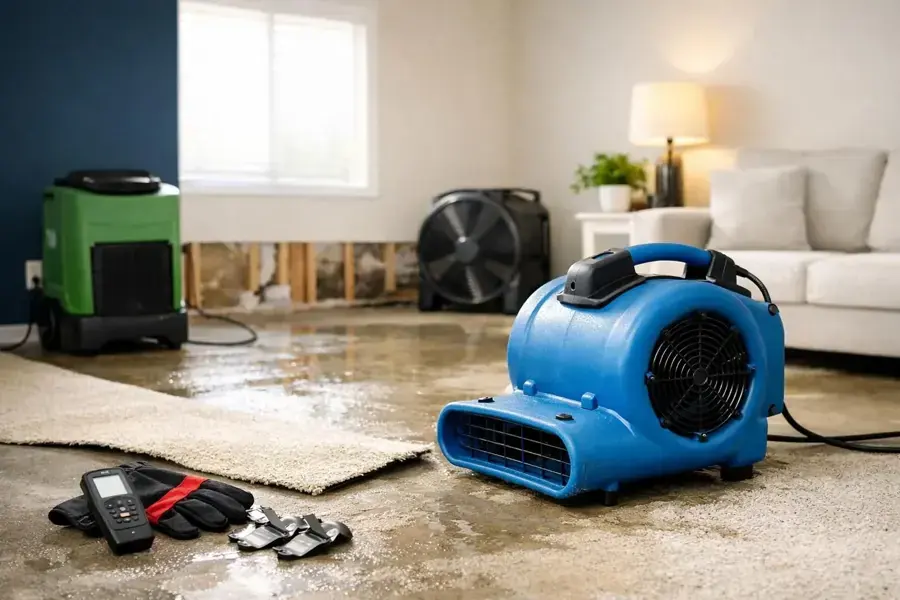
Water Damage Restoration Services in Southlake, TX
Twelve water and sewage services for Southlake homes and businesses, from the first extraction pass to the final dry reading.
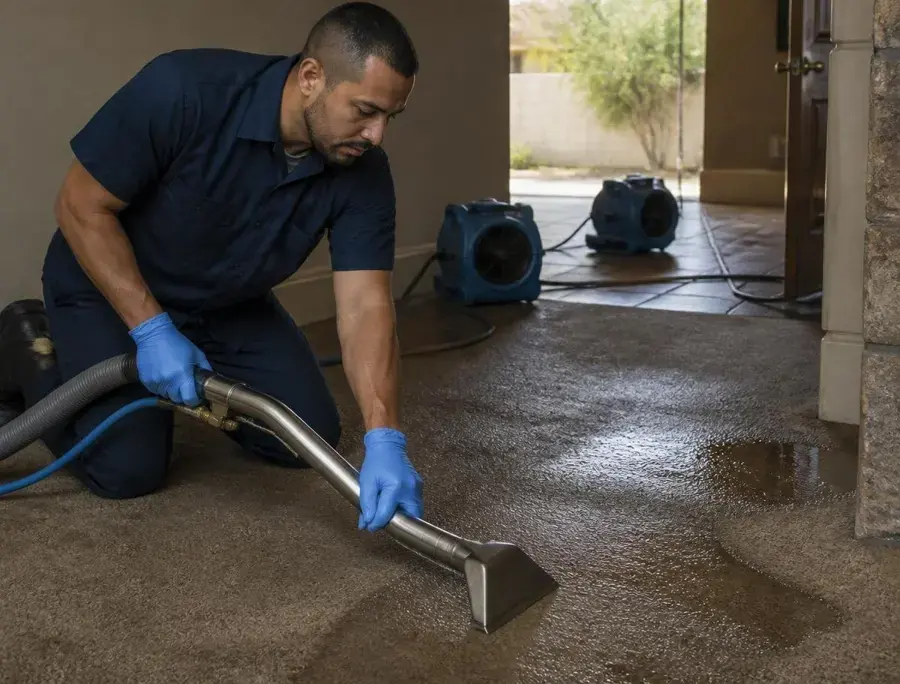
Water Extraction and Removal
Standing water pulled from carpet, tile and concrete, then each room read with meters.
See the service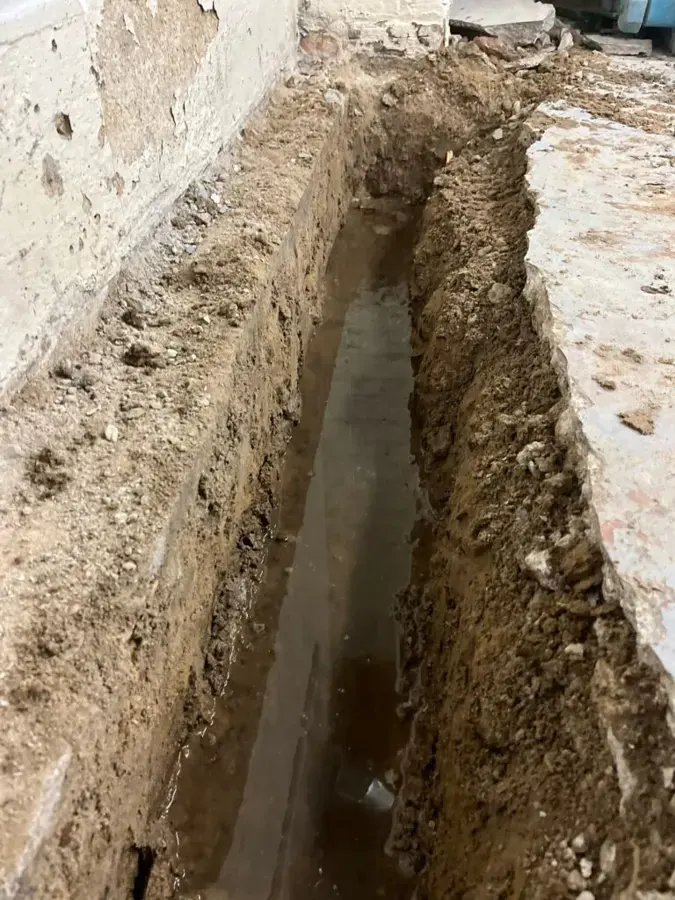
Slab Leak Water Damage
Water from a leak under the slab dried out of flooring, concrete and wall bottoms.
See the service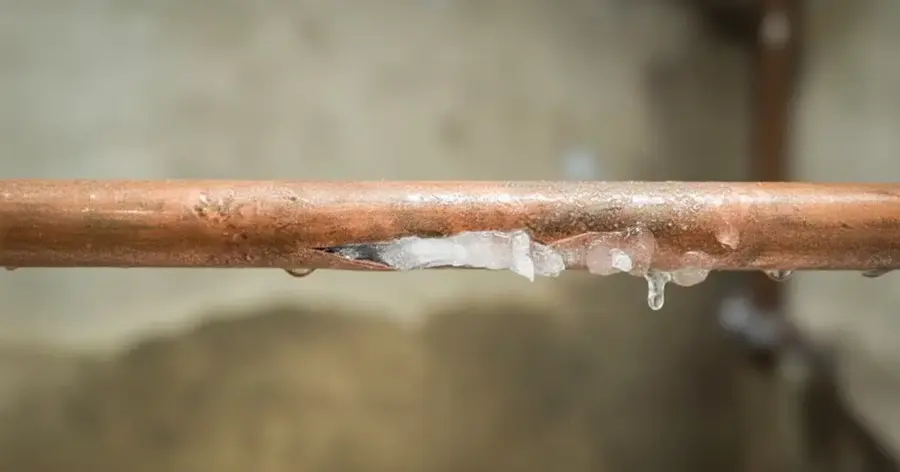
Frozen Pipe Water Damage
Split pipes from a hard North Texas freeze, with wet ceilings and walls dried after the thaw.
See the service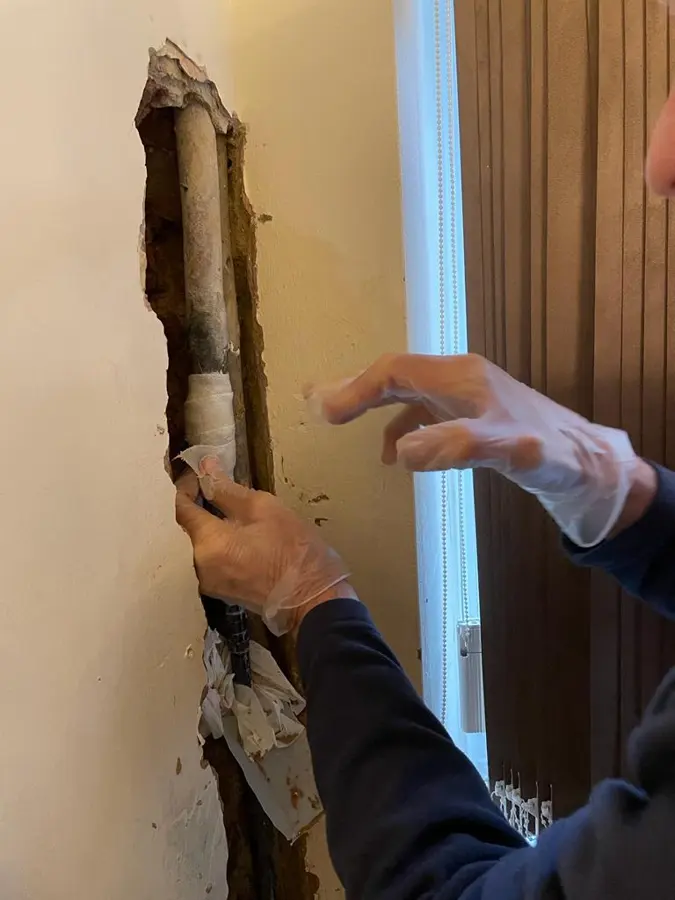
Burst Pipe Water Damage
Supply pipe failures inside walls and ceilings, opened only where readings show water.
See the service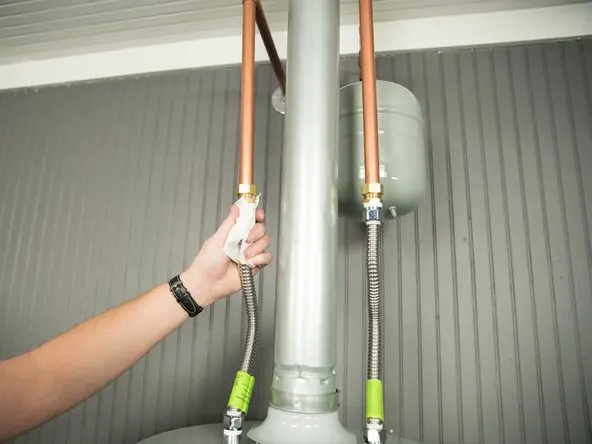
Water Heater Leak Cleanup
Water from a failed tank, relief valve or drain pan extracted and the room dried.
See the service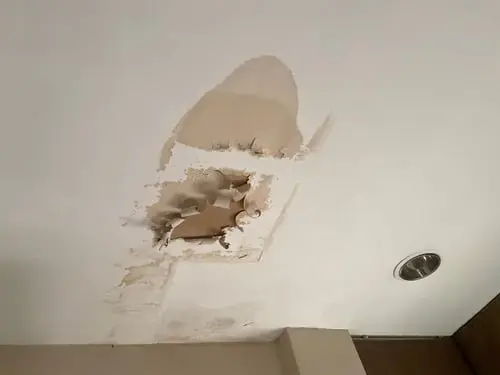
Ceiling Leak Water Damage
Leaks from upstairs fixtures or equipment traced, sagging drywall opened safely, joists dried.
See the service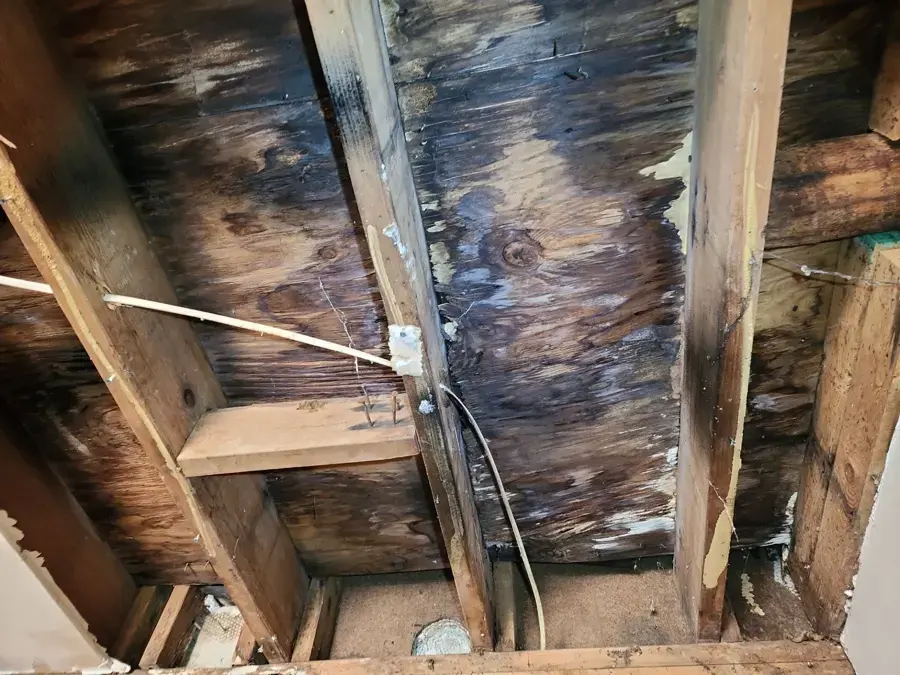
Roof Leak Water Damage
Spring storm water that got past the roof, with wet insulation removed and ceilings dried.
See the service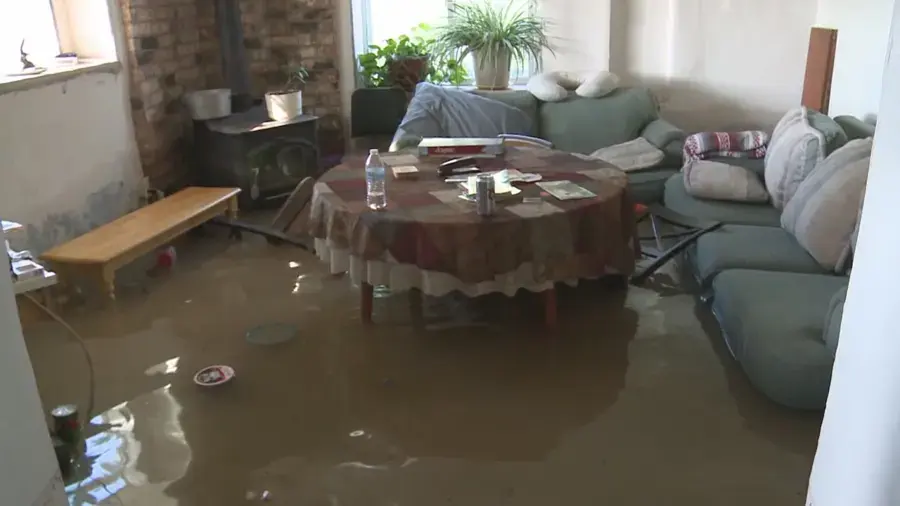
Storm and Flash Flood Cleanup
Outside storm water handled as Category 3: removal, cleaning, treatment, then drying.
See the service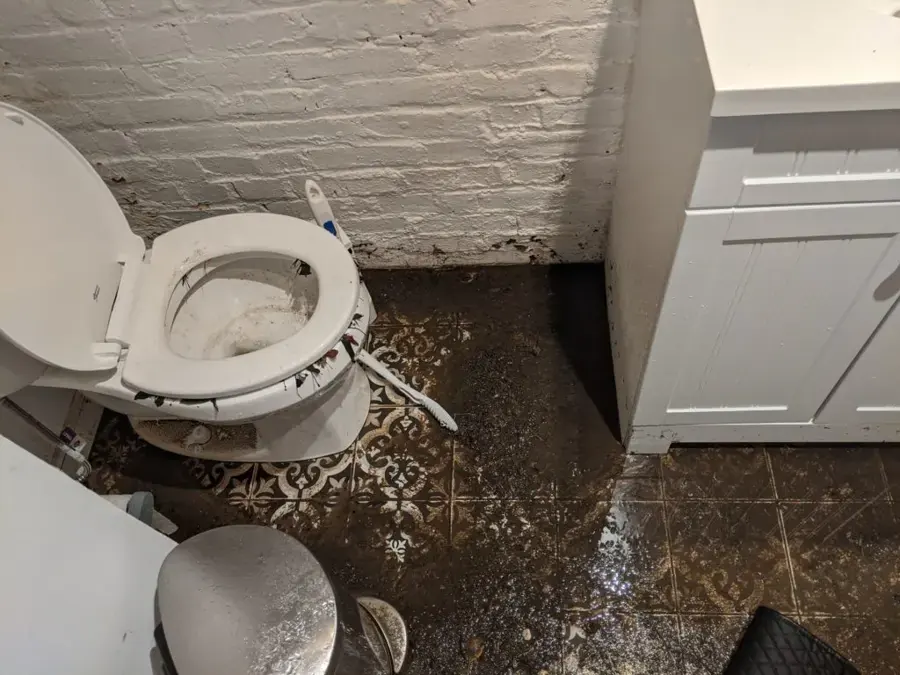
Sewage Backup Cleanup
Toilet, tub and drain backups contained, removed and disinfected before any drying starts.
See the service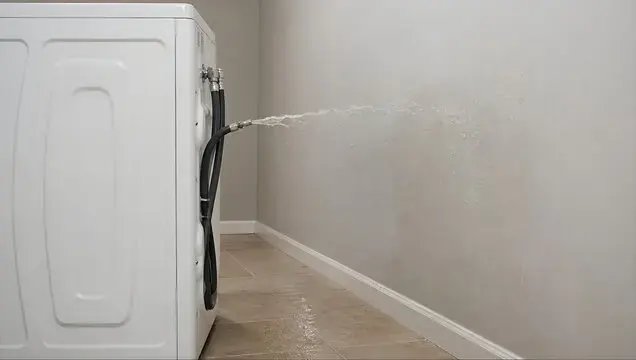
Appliance and Supply Hose Leaks
Washer, dishwasher, ice maker and toilet supply leaks dried out of floors and cabinets.
See the service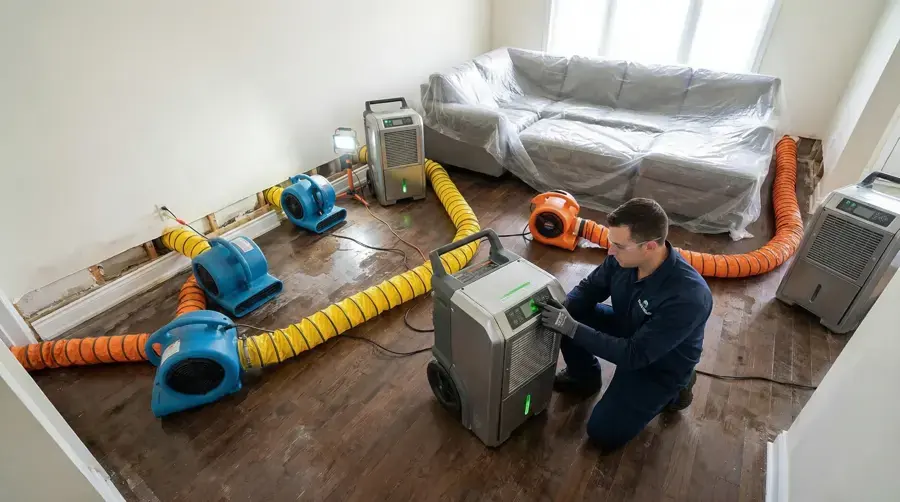
Structural Drying and Dehumidification
Framing, subfloor and slab dried until readings sit within 2 to 4 points of dry.
See the service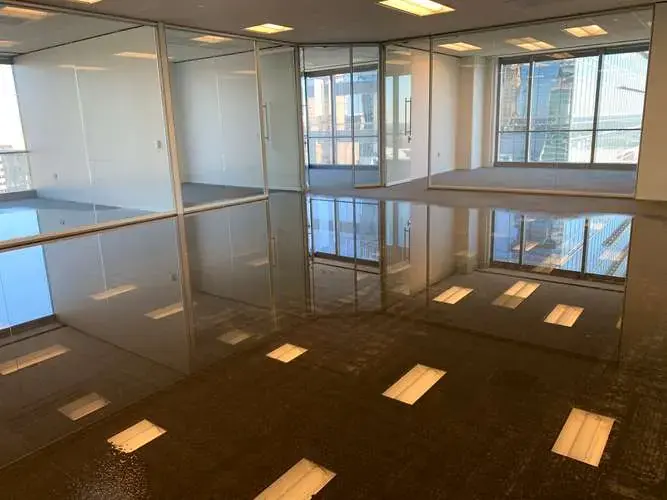
Commercial Water Damage
Shops, offices and school buildings dried in phases, with a full drying record.
See the serviceHow a water loss is handled across the city
Each dry-out follows the same four commitments, whether the water came from under the slab, from a split pipe or from a spring downpour.
Rapid local response
Dispatch runs day and night, and active water anywhere from Timarron to Clariden Ranch gets emergency handling, holidays included.
IICRC S500 drying standard
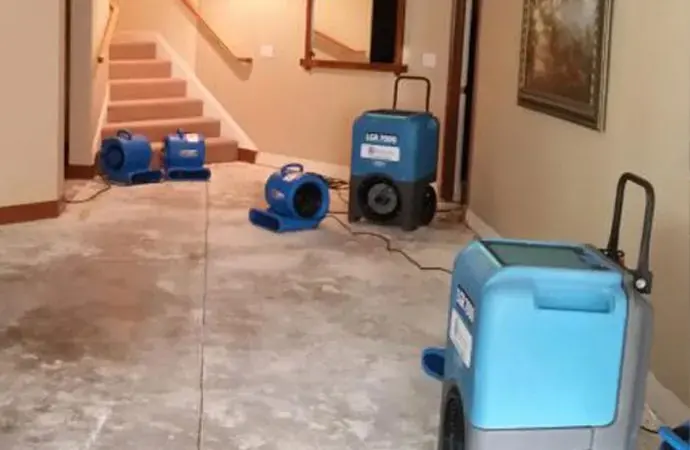
The drying team dries the structure itself, not just the surface, with air movers and LGR dehumidifiers matched to the class of loss.
Claim-ready documentation
A moisture map, daily drying logs and photos taken before any demolition build the file an adjuster works from.
North Texas water know-how
Slab-on-grade foundations are the common North Texas pattern, so the walkthrough checks the slab, the walls and the ceiling below, not just the wet room.
What does water damage restoration cost here?
Most water damage restoration costs between $1,200 and $11,000. Early clean-water losses land near the bottom of that range; sewage, outside flood water or a fully wet floor push it higher.
Early clean-water loss
- Category 1 water in one or two rooms
- Extracted and dried in place
- Readings logged until dry
Hidden or spreading water
- Water under the slab or overhead
- Flooring, baseboards or drywall opened
- Several rooms on drying equipment
Category 3 or a full wet floor
- Sewage or outside storm water
- Porous materials removed under containment
- Surfaces treated before drying
The walkthrough sets the final figure: water category, wet square footage, the materials involved and how long the water sat before drying started.
Run the water damage cost calculatorWhat a water damage dry-out looks like in a local home
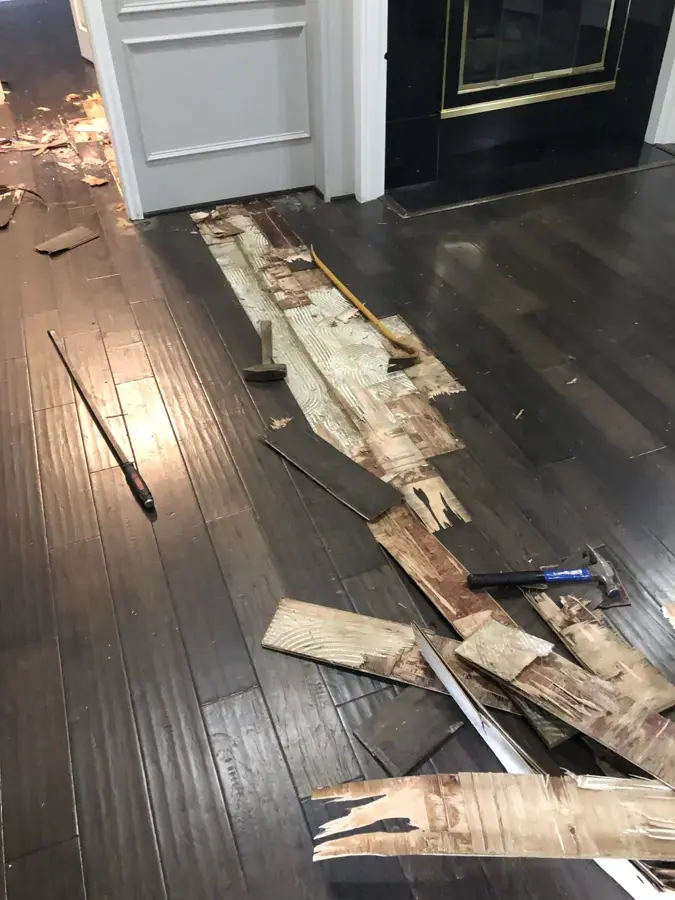
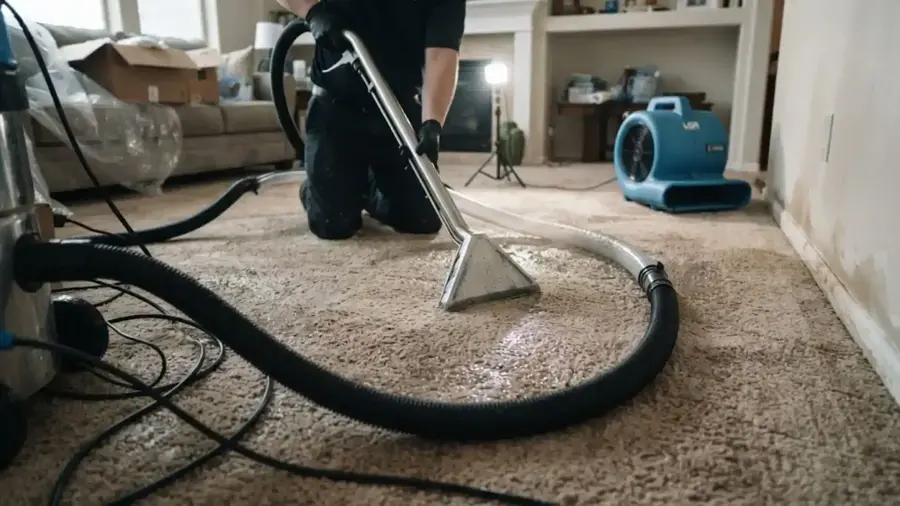
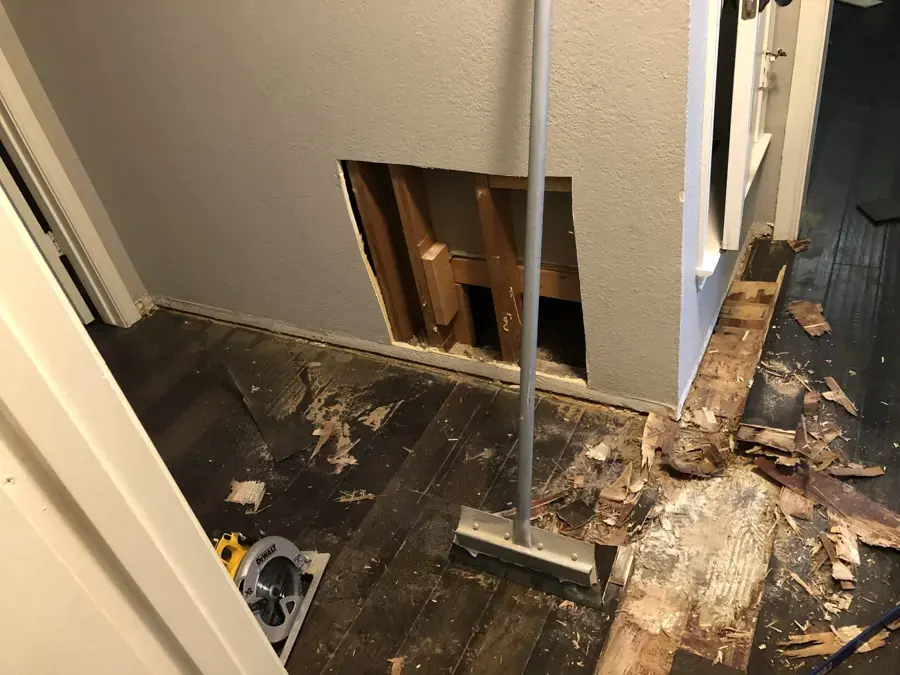
Water damage dried to the IICRC S500 standard
The IICRC S500 standard groups water losses by category and class, which decides what comes out, what stays, where equipment goes and what counts as dry.
Read the structure
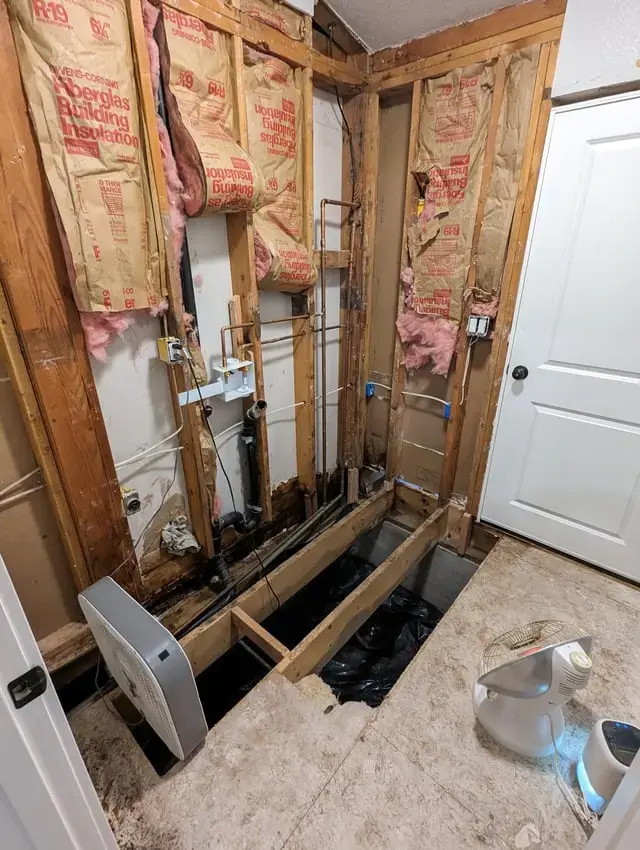
The tech who does the walkthrough checks slab, framing and drywall with thermal imaging and pinless meters, and marks every wet area on a moisture map.
Remove the water
The extraction crew takes out standing water with truck-mounted and portable extractors before any drying equipment is set.
Match the equipment
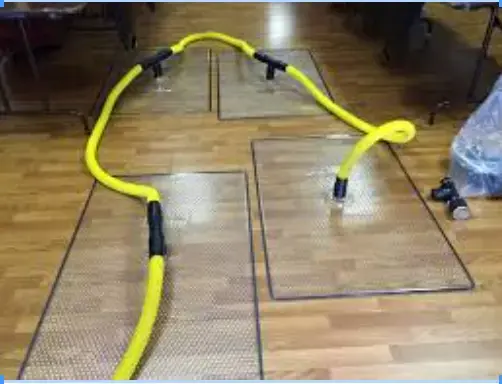
Air movers and LGR dehumidifiers are sized to the class of loss, and drywall is opened only where the readings point.
Prove it is dry
Readings are logged each day, and nothing is switched off until every material sits within 2 to 4 points of a dry reference.
Documentation for your insurance claim
Adjusters decide on evidence, so the restoration team assembles the claim file during the work, step by step.
- A room-by-room moisture map drawn before any equipment goes down
- Daily drying logs with temperature, humidity and material readings
- Dated photos of the damage and of every material before it comes out
- The water category and class of loss from the first walkthrough
- A line-item scope covering the extraction, the removal and the drying
Coverage depends on your policy
The city notes that standard homeowners insurance does not cover flood damage, and that most National Flood Insurance Program claims come from outside the mapped floodplain.
Your insurer decides what your policy covers, and the claim file is built either way.
The equipment behind a dry-out
- Truck-mounted extractors. Remove standing water from carpet, tile and concrete much faster than portable units.
- LGR dehumidifiers. These refrigerant units keep working when spring and summer air turns muggy, and desiccant units take on dense materials.
- Air movers. Placed to match each room's evaporation load instead of simply pointing at the floor.
- Thermal cameras and pinless meters. Locate water behind drywall, under flooring and above ceilings before anything is opened.
One call reaches water damage pros, 24/7
Local water damage pros cover the whole city, from Town Square and Timarron to Clariden Ranch and Kirkwood Hollow.
Tell dispatch what is wet and where the water came from, and extraction gets arranged.
Start water removal in SouthlakeEmail for questions that can wait: contact@
Water damage service across Southlake and nearby cities
Neighborhoods and corridors
What to do before the extraction crew starts
- Close the main shutoff. The city's Protect Your Pipes advice includes knowing where the main shutoff valve is; close it, or the fixture valve, if it is safe.
- Switch off wet circuits. Turn off the breaker for any room where water reaches outlets, cords or light fixtures.
- Get belongings off the floor. Move rugs, boxes and electronics out of the water, and slip foil under furniture legs that stay put.
- Take photos before cleanup. Pictures of the source, the water and the damage support the claim file.
- Call for extraction. Water left standing keeps spreading into flooring and walls, so the extraction crew pulls it out first.
All water damage categories covered
Clean, gray and black water each get their own handling under the IICRC S500 standard.
Category 1, clean water
Water straight from a supply pipe, a slab leak, a tank or a frozen pipe starts out clean, so the aim is to dry it in place before it degrades.
See water extractionCategory 2, gray water
Washer drain water, dishwasher water and AC condensate carry some contamination, so soaked pad is swapped out and an EPA-registered antimicrobial goes on hard surfaces.
See appliance leak cleanupCategory 3, black water
Black water from sewage backups or outside storm runoff. The cleanup crew contains the area, removes porous materials and disinfects before drying.
See sewage backup cleanup
What shapes water damage in local homes
A handful of local facts shape most water losses here.
- Fast growth after the airport opened. The city stayed rural until DFW Airport was completed in the 1970s, then grew from 2,808 residents in 1980 to 21,519 in 2000 and 31,265 at the 2020 Census.
- Slab-on-grade foundations. Slab foundations are the common North Texas pattern, so a leak under the floor can soak flooring and wall bottoms before it shows.
- The February 2021 freeze. During Winter Storm Uri, water pressure dropped and city tanks went dry because Fort Worth, which sells the city treated water, could not deliver; a boil water notice ran from February 16 to February 21, 2021.
- A water leak in November 2023. A large leak near Southlake Boulevard and Randol Mill led to a boil water notice for parts of the city, including the westside.
- Storm water and Dove Creek. Dove Creek has a mapped 100-year FEMA floodplain, and the city notes that very heavy rain in a short time can exceed any drainage system.
Thaw, January 2026. The National Weather Service lists a North Texas winter storm on January 23 to 26, 2026. On January 28, 2026, the city said the thaw had begun, and it posted pipe-protection advice for residents.
Common water damage questions
Water spreading in your home?
Questions can wait. Dispatch is open around the clock, and active water gets emergency handling at any hour.
(888) 527-9134 Start Southlake water removal nowHow quickly does water removal start here?
Dispatch never closes. Active water is handled as an emergency day or night, on weekends and on holidays, and extraction is arranged as soon as the details are known, since water sitting in slab edges and drywall only spreads.
Does homeowners insurance cover flood damage in the area?
The city notes that standard homeowners insurance does not cover flood damage, which needs separate flood coverage, and that most National Flood Insurance Program claims come from outside the mapped floodplain. A sudden leak inside the home is treated differently. Coverage depends on your policy, so check with your own insurer.
Can the city adjust my water bill after a leak?
The city's water utility offers residential customers a leak adjustment request once per rolling 12-month period. The decision is the city's, so keep the plumber's repair record and the drying documentation together.
Who handles a sewer backup in town?
The city asks residents to call its Wastewater Division first, and staff clean and check the sewer main to see whether a plumber is needed. Residents are responsible for the sewer service pipe from the house to and including the tap. Sewage inside the home is Category 3 and calls for sewage backup cleanup.
How do I protect pipes before a hard freeze here?
The city's Protect Your Pipes advice covers insulating exposed pipes in garages, attics, crawl spaces and exterior walls, opening cabinet doors under sinks, keeping the thermostat at 55 degrees or higher, letting faucets drip and knowing where the main shutoff valve is. The pipe freeze risk check scores your setup.
Why does a slab leak cause so much hidden damage?
Slab-on-grade foundations are the common North Texas pattern, so supply pipe runs under or through the concrete. Water from a leak there rises into the flooring and spreads along the slab before it shows. Slab leak water damage covers how the slab gets dried.
Does wet drywall always need replacing?
It depends on the water. Clean water in drywall can usually be dried where it is if the equipment goes in quickly. Sewage or outside storm water means cutting the drywall out above the water mark, and any piece that will not dry also comes out.
What happens when a frozen pipe thaws?
While the pipe stays frozen, the ice seals the split. Once it thaws, water runs through the crack, often inside an attic, a ceiling or an exterior wall. Close the main as soon as water shows and keep clear of a sagging ceiling.
Who maintains creeks and drainage ditches in the city?
The city maintains public storm drains, pipes and channels in streets and public areas. Property owners and homeowners associations maintain creeks, drainage easements, roadside ditches, driveway culverts and ponds on private property.
What sets the price of a water damage job?
The figure tracks four variables: which category the water is, the wet square footage, the kind of materials, and the time before drying began. A typical range is a click away in the water damage cost calculator.
Water moving in your home? Call now.
Water that sits keeps working into slab edges, baseboards and drywall. Local water damage pros work around the clock: the extraction crew removes it, the drying team dries the structure and the claim file grows with every reading.
(888) 527-9134Talk to Southlake water removal now