Structural Drying and Dehumidification in Southlake, TX
Walls, subfloors and framing hold water long after the puddle is gone. In Southlake, crews dry them with air movers and LGR dehumidifiers, and daily readings show when the structure has returned to normal.
(888) 527-9134Southlake structural drying help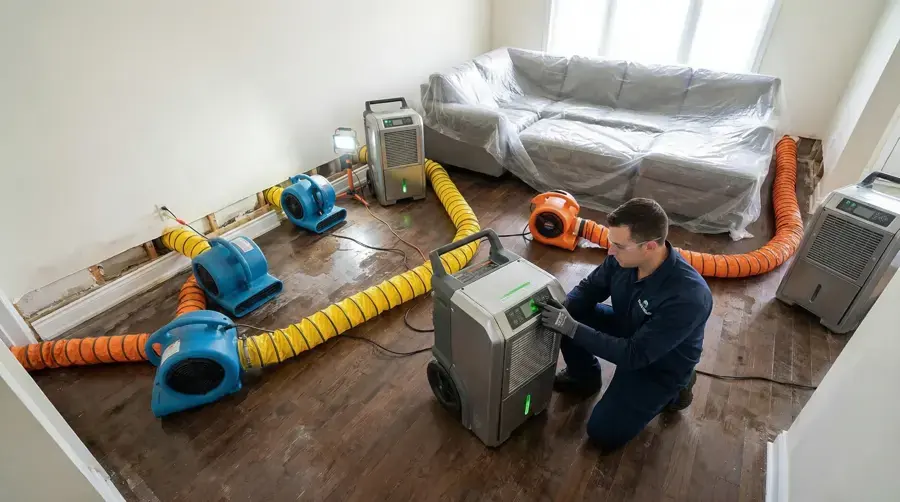
First steps for structural drying and dehumidification in Southlake, TX
- 01Map the moisture Meters and a thermal camera show which materials hold water and how far it spread.
- 02Match the equipment Air movers, LGR dehumidifiers or desiccant units are chosen for the class of damage.
- 03Read each visit Temperature, humidity and material readings are logged, and equipment is adjusted.
- 04Confirm dry Equipment leaves once material readings match dry reference points.
Drying is a measured process, not a matter of leaving fans running. Water sits in drywall, framing and subfloor in amounts the eye cannot see, and the job is finished only when meters on the affected materials match readings from dry areas of the same house. With a median value near $1,014,500 in Southlake, that record also protects a large investment.
What does structural drying and dehumidification cost in Southlake, TX?
One room with light wicking often runs $1,200 to $2,800, several rooms with wet walls sit near $2,800 to $5,500, and hardwood, plaster or slab drying can pass $5,500 to $8,000+.
Single room, limited wicking
- Air movers and an LGR unit
- Daily moisture readings
- Dated written drying log
Several rooms, wet walls
- Wall and ceiling cavities dried
- Several LGR dehumidifiers
- Psychrometric monitoring
Hardwood, plaster or slab
- Desiccant or floor drying systems
- Extended equipment time
- Complete drying log
These are typical ranges, not a quote. The water category, the wet square footage, the material class and how soon drying started move the final number most.
Run the water damage cost calculatorHow structural drying and dehumidification is handled in Southlake
Survey
The crew measures temperature, humidity and moisture in the affected materials and maps what is wet.
Set up
Air movers, dehumidifiers and any desiccant units are placed so air passes over every wet surface.
Monitor
Each visit adds readings, and equipment is moved, added or taken away as the structure dries.
Release
When readings match dry reference points, equipment leaves and the log is delivered for the claim.
The classes of water damage
Drying plans are set by how much water the materials absorbed and how quickly they release it.
- Class 1 or 2 covers one room with limited wicking, dried with air movers and an LGR unit.
- Class 3 covers water that soaked down from above through walls, ceilings and insulation.
- Class 4 covers dense materials such as hardwood, plaster and concrete that need desiccant or floor drying systems.
Equipment goes where the moisture map points, and it is adjusted on each visit as readings drop.
Why records matter on large homes
New houses in the city are built from foundation plans sealed by a Texas engineer, which shows how much documentation goes into a build. Drying records follow the same logic: dated readings, equipment lists and photos tell the adjuster exactly what was done.
Large footprints and high-value finishes leave little room for guesses, so careful records matter more as a home gets bigger.
What daily readings show
Temperature, humidity and material readings are logged each visit so equipment can be moved, added or removed as the structure dries. When readings match the dry standard, the equipment leaves and the log goes into the claim file.
Standing water must leave first, so water extraction comes before drying, and storm damage often needs both with flood cleanup. The main structural drying page covers the full process.
Structural Drying and Dehumidification across Southlake and nearby cities
Drying equipment is placed across the city, from large custom homes in Shady Oaks, Clariden Ranch and Kirkwood Hollow to master-planned streets in Timarron and Carillon, and in shops and offices near State Highway 114 and Kimball Avenue.
The same service nearby: structural drying and dehumidification in Grapevine, Trophy Club, Flower Mound.
Water damage restoration in SouthlakeRelated water damage services in Southlake
Structural Drying and Dehumidification questions in Southlake, TX
Water still moving in Southlake?
Drying that stops early leaves moisture in the framing, and a crew can explain what the readings need to show before equipment leaves.
(888) 527-9134 Southlake drying equipment helpHow long does structural drying take?
It depends on the materials and how much water they absorbed, so no number is promised. Readings decide, and equipment stays until the structure matches dry reference points.
Why not just open windows and use fans?
Fans move air but do not remove moisture from the house. LGR dehumidifiers pull water out of the air, and air movers push dry air across wet materials, so both are used together.
What is an LGR dehumidifier?
A low grain refrigerant dehumidifier, which keeps pulling moisture out of the air even when the air is already fairly dry. It is the standard tool for most drying jobs.
When is desiccant drying used?
For dense materials like hardwood, plaster and concrete, and for jobs where refrigerant units cannot lower humidity enough. Desiccant units dry the air to a much lower level.
Can structural drying save hardwood floors?
Sometimes. Specialized floor drying systems can pull water out of boards and subfloor, but boards that have cupped badly may still need replacing.
Why do the readings get logged?
The log shows what was wet, what equipment ran and when each material reached dry, so adjusters can see the work and repairs are not covered over damp framing.
Walls still damp? Dry them to readings.
Say how the water entered and which materials are wet, and the equipment plan is matched to the class of damage.
(888) 527-9134Set up the dry-out