Structural Drying and Dehumidification in Trophy Club, TX
Water that soaks into framing, floors and walls does not leave on its own. LGR dehumidifiers and air movers draw it out, and daily readings show when each material has actually dried.
(888) 527-9134Plan the drying setup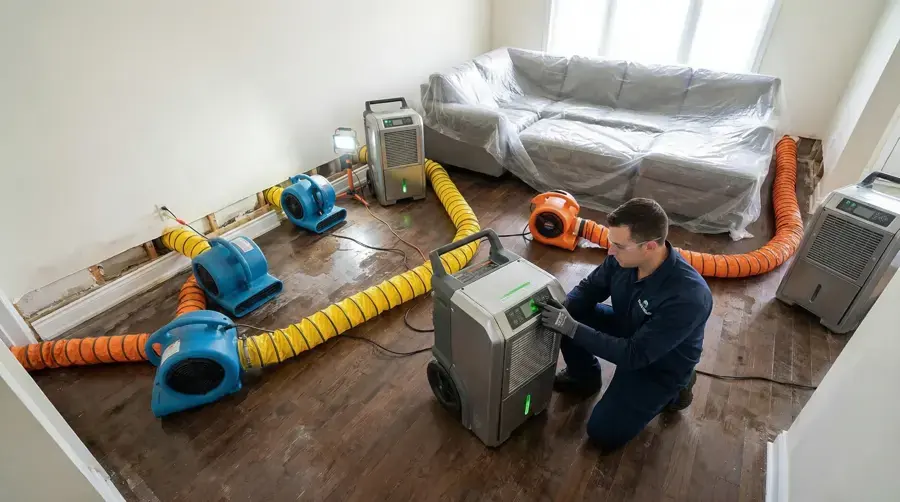
First steps for structural drying and dehumidification in Trophy Club, TX
- 01Stop new moisture Fix or shut off the source so the drying equipment is not fighting an active leak.
- 02Keep doors closed Close the rooms being dried so the equipment can control the air in a smaller space.
- 03Leave the equipment alone Do not move or unplug dehumidifiers or air movers, since the placement was planned.
- 04Share the readings Ask for the daily log so you and the adjuster can follow progress.
Drying is a measured process, not a matter of leaving fans on. The American Community Survey puts the median year built near 2002, and about 1,368 homes were built from 2010 to 2019, so much of the local housing is relatively new. Whatever the age of the house, the same drying science applies: control humidity, move air and measure the result.
What does structural drying and dehumidification cost in Trophy Club, TX?
Structural drying alone usually runs from $1,200 to $8,000 or more, driven by the drying class, the number of rooms and how long equipment has to stay in place.
One room, light to moderate
- Dehumidifier and fans placed
- Readings taken each visit
- Dry reference confirmed
Several rooms, Class 3
- Cavities dried through small openings
- Several dehumidifiers running
- Psychrometric monitoring
Hardwood, plaster or slab
- Desiccant or mat drying
- Extended equipment time
- Full drying record
These are typical ranges, not a quote. The water category, the wet square footage, the material class and how soon drying started move the final number most.
Run the water damage cost calculatorHow structural drying and dehumidification is handled in Trophy Club
Classify the loss
The crew identifies the water category and the drying class from readings across floors, walls and ceilings.
Set the equipment
LGR dehumidifiers and air movers are placed to move air across wet surfaces, with desiccant added for dense materials.
Monitor daily
Temperature, humidity and moisture content are recorded each visit, and equipment is adjusted as the numbers change.
Confirm dry
Everything wet is measured against a dry reference, and equipment comes out only when each material meets it.
How drying classes work
Classes describe how much water and how many porous materials are involved.
- Class 1: a small area with little absorbed water
- Class 2: a whole room with carpet, pad or framing wet
- Class 3: water from above soaking ceilings, walls and floors
- Class 4: dense materials such as hardwood, plaster or concrete
The class sets how many dehumidifiers and air movers go in and how long the equipment stays. Hardwood and slab work often falls into Class 4 because dense materials release moisture slowly, so those jobs run longer and use desiccant or floor drying systems.
Why monitoring matters
Psychrometric readings track temperature, humidity and the moisture content of the air, and meters track the materials themselves. Together they show whether drying is progressing or stalled. Humidity is controlled across the whole room because water leaving a wet wall or floor has to go somewhere, and without dehumidification it settles on cooler surfaces.
If readings flatten before the dry reference is met, the crew adds a different tool, such as desiccant, or opens another cavity.
Equipment leaves when the numbers say so
Equipment is removed only when framing, subfloor, drywall and flooring reach the dry standard, and the log is handed to the insurer. See water extraction for the stage before drying and storm and flood cleanup for contaminated water.
Structural Drying and Dehumidification across Trophy Club and nearby cities
Drying equipment goes into houses across Canterbury Hills, Churchill Downs, Hogan's Glen, The Knoll and Abbey Moor, the Town Center townhomes and commercial suites alike, on the Denton County side of town and the small Tarrant County portion.
The same service nearby: structural drying and dehumidification in Grapevine, Southlake, Flower Mound.
Water damage restoration in Trophy ClubRelated water damage services in Trophy Club
Structural Drying and Dehumidification questions in Trophy Club, TX
Water still moving in Trophy Club?
Describe which rooms and materials got wet, and the crew can explain the equipment plan and what the daily readings will show.
(888) 527-9134 Trophy Club structural drying helpHow long will the equipment stay?
That depends on the materials and readings, not a fixed schedule. Dense flooring and slabs take longer, and the daily log shows when each material has reached the dry reference.
Why are the dehumidifiers so loud?
They move a lot of air and run constantly to pull moisture from it. The noise lasts only as long as the drying does, and the crew can explain placement and power use.
Can wet drywall be dried instead of replaced?
Often, if it is clean water and the drywall is firm. Sections that are saturated, crumbling or touched by sewage are removed, and cavities behind it are dried through openings.
What separates LGR from desiccant dehumidifiers?
LGR units are refrigerant dehumidifiers that work well in warm, humid rooms. Desiccant units use a drying material and work better for dense materials and cooler conditions.
Does the whole house have to be dried?
No. Only the affected rooms and connected cavities, though doors and vents may be closed so the equipment controls the air in a smaller space.
How do I know drying is finished?
Readings on each wet material match a dry reference from an unaffected area, and they hold steady. The crew shows you the log before removing equipment.
Wet walls and floors?
Share the source of the water and the affected rooms, and the drying class, equipment and monitoring plan will be set from there.
(888) 527-9134Plan structural drying in Trophy Club