Structural Drying in Irving, TX
Once the water is out, the framing, subfloor and wall cavities still hold moisture. Crews on site set air movers and dehumidifiers by the readings and keep them running until the structure reaches a dry standard.
(888) 527-9134Irving drying equipment help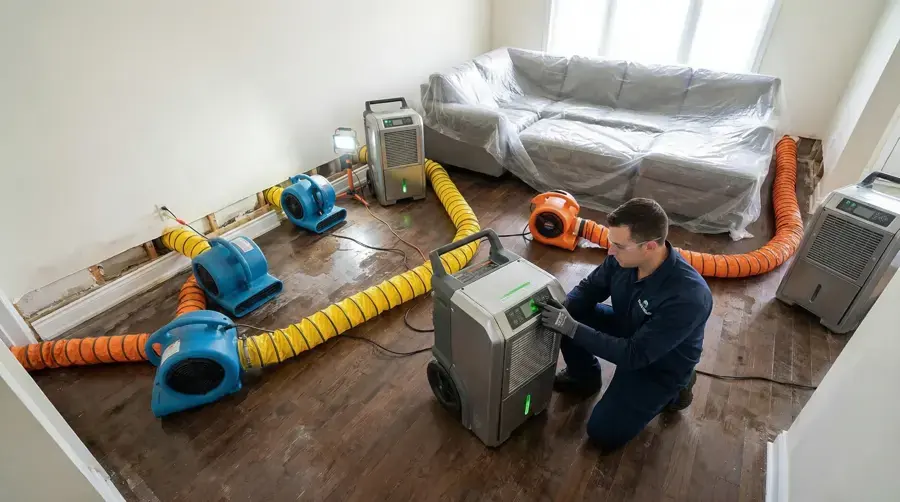
First steps for structural drying and dehumidification in Irving, TX
- 01Set the starting readings Meters record moisture in each wet material, and an unaffected sample sets the dry reference.
- 02Place the equipment Air movers and dehumidifiers go in by room volume and material, with desiccant units for dense surfaces.
- 03Read and adjust Daily visits check the readings and reposition or add equipment where drying has stalled.
- 04Remove and report Equipment comes out when readings match the reference, and the drying log is handed over.
Extraction removes the water that can be seen, but framing, subfloors and wall cavities keep moisture that dries out only slowly. A surface that feels dry to the touch can still be holding water inside. The 2024 American Community Survey estimate lists 1987 as the median year Irving homes were built, so many buildings are decades old and combine framing and finishes that dry at different paces.
What does structural drying and dehumidification cost in Irving, TX?
Structural drying runs from about $1,200 for one lightly wet room to $8,000+ for dense materials such as hardwood, plaster or concrete, where equipment stays longer. Equipment days drive the price.
One room, light to moderate loss
- Air movers and an LGR unit
- Daily readings
- A drying log
Several rooms, wall cavities
- Wall and ceiling cavities dried
- Several dehumidifiers
- Psychrometric monitoring
Dense materials: hardwood, plaster or slab
- Desiccant or floor drying systems
- Longer equipment time
- A complete drying record
These are typical ranges, not a quote. The water category, the wet square footage, the material class and how soon drying started move the final number most.
Run the water damage cost calculatorHow structural drying and dehumidification is handled in Irving
Take the measure
Moisture meters and thermal imaging record how wet each material is, room by room, and set the target to match.
Build the system
Dehumidifiers and air movers are sized to the room, and sealed or opened cavities are chosen to suit each wall.
Monitor daily
Temperature, humidity and material readings are checked at every visit, and the layout changes when the numbers do.
Confirm dry
When every material matches the reference, equipment is pulled and the full log is delivered.
Why drying takes longer than removal
Wet wood, concrete and drywall release moisture slowly, and a room can feel dry while its framing still reads wet.
- Air movers push dry air across wet surfaces to speed evaporation.
- LGR dehumidifiers pull the released moisture out of the air so it does not settle elsewhere.
- Desiccant units handle dense materials that standard equipment dries too slowly.
- Meters and thermal cameras check progress without opening every wall.
Equipment is moved and added as the numbers change, so the setup on day one is rarely the setup on day three.
How the dry standard is set
A dry reference reading is taken from a similar unaffected material in the same building. Wet materials are measured against it at each visit, and the equipment comes out only when the two match.
The log of readings, equipment counts and dates is what the adjuster uses to see that drying was needed and was finished.
Drying by material
Different materials need different treatment, and the plan changes with each.
- Drywall and insulation: often removed if soaked, dried if only damp.
- Framing and subfloor: dried in place with air and dehumidification.
- Hardwood and concrete: slower, often with mats or desiccant units.
Because dense materials shed moisture slowest, they usually set how long the whole job runs.
Drying usually follows water extraction and ties into storm cleanup after heavy rain.
Structural Drying and Dehumidification across Irving and nearby cities
Drying equipment goes into houses, apartments and businesses across the city, from Las Colinas and Valley Ranch to the older eastern neighborhoods, and the setup changes with each building, since a single-family house and a retail suite hold moisture differently.
The same service nearby: structural drying and dehumidification in Grapevine, Coppell, Southlake.
Water damage restoration in IrvingRelated water damage services in Irving
Structural Drying and Dehumidification questions in Irving, TX
Water still moving in Irving?
Water removed but walls and floors still damp? Ask what readings and equipment come next.
(888) 527-9134 Irving drying helpWhy does drying take several days?
Wood, drywall and concrete release moisture slowly, and the air can only take up so much at a time. Equipment keeps working until the readings, not the calendar, say it is done.
Can the equipment run without extraction first?
Drying gets much harder with standing water, so extraction comes first whenever there is any. Dehumidifiers cannot keep up with a wet floor.
What is an LGR dehumidifier?
LGR stands for low grain refrigerant. These units cool air to pull water out of it and can hold humidity low enough to draw moisture from wet materials.
When is a desiccant unit needed?
Desiccant units work in low humidity and help with dense materials such as hardwood, plaster and concrete, which LGR units alone can dry too slowly.
Do walls always have to be opened?
No. Many wall cavities can be vented through small openings or dried through the baseboard area, and meter readings decide whether more access is needed.
What does structural drying cost?
Structural drying runs from about $1,200 to $8,000+, rising with the number of rooms, the density of the materials and the days of equipment time.
Dry to the framing, not just the surface
Structural drying in town starts with a call about what is still damp, which materials are involved and when the water was removed.
(888) 527-9134Schedule drying in Irving