Structural Drying and Dehumidification in Coppell, TX
Drywall, framing and floors keep holding water long after the standing water is gone. Air movers, dehumidifiers and daily readings pull it out in measured steps until each material is dry.
(888) 527-9134Coppell drying help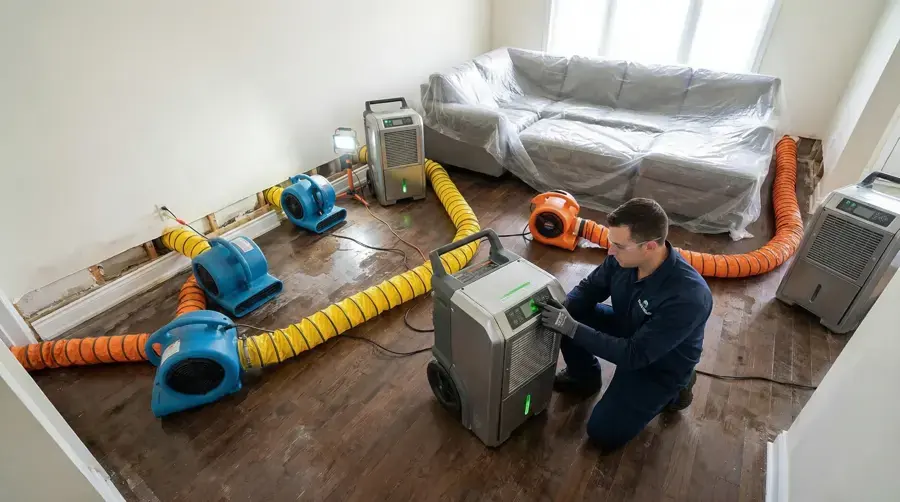
First steps for structural drying and dehumidification in Coppell, TX
- 01Map the wet areas Meters and a thermal camera mark every wet wall, floor and cavity before equipment is placed.
- 02Set the equipment Air movers and dehumidifiers are sized to the room volume and the wet material, then logged by room.
- 03Read each day Moisture and air readings show whether drying is on track, and equipment is moved as needed.
- 04Confirm dry The crew compares each material to its dry reference, then removes the equipment and files the log.
Extraction removes the water that is visible. Structural drying removes the rest, which sits inside drywall, framing, subfloors and the air itself. The city's Vision 2040 plan describes Coppell's housing stock as aging and largely single-family, so most drying work happens in established houses where framing, drywall and flooring have to dry without being torn out.
What does structural drying and dehumidification cost in Coppell, TX?
Structural drying in Coppell usually runs from $1,200 for a single room to $8,000 or more for deep Class 4 materials, depending on the rooms involved and how long the equipment must run.
One room, light saturation
- LGR unit and air movers
- Daily meter readings
- Written drying log
Several rooms, Class 3
- Wall and ceiling cavities dried
- Multiple dehumidifiers
- Psychrometric tracking
Class 4: hardwood and dense materials
- Desiccant or floor systems
- Longer equipment run
- Complete drying log
These are typical ranges, not a quote. The water category, the wet square footage, the material class and how soon drying started move the final number most.
Run the water damage cost calculatorHow structural drying and dehumidification is handled in Coppell
Assess the loss
Meters, a thermal camera and a psychrometer show which materials are wet and what class of loss it is.
Plan the setup
Dehumidifier count, air mover placement and any desiccant or floor systems are chosen from the room volume and the materials.
Monitor daily
Readings track each material and the air in the room, and equipment is repositioned as damp moves.
Verify and close
Each material reaches its dry reference, then the equipment is removed and the log is delivered for the claim.
How drying equipment is sized
The job is planned from the room, not from a catalog.
- Room volume sets how many dehumidifiers the air needs
- Wet wall and floor area sets how many air movers are placed
- Dense materials like hardwood call for desiccant or floor systems
- Closed cavities are dried with vents, ports or small openings
Equipment is logged by room, so the record shows exactly what ran where.
Reading the room every day
Moisture meters read the materials, while a psychrometer reads air temperature and humidity. Together they show whether the equipment is pulling water out or just moving it around, and the crew adjusts placement as the readings change.
A material is dry when it matches the reference reading from an unaffected part of the same house, not when it feels dry to the hand.
Drying classes in plain terms
Light losses affect part of a room and low-porosity surfaces, while heavy losses soak walls and dense floors. The class sets the equipment plan and the time on site, which is why a small kitchen leak and a flooded hardwood room never get the same setup.
Drying follows water extraction and supports storm and flash flood cleanup, and the structural drying work around Grapevine follows the same method.
Structural Drying and Dehumidification across Coppell and nearby cities
Drying equipment goes into established houses and commercial suites across Coppell, from Old Town and Gibbs Station to Riverchase, Park Meadow and the business zone in the southwest, wherever water has soaked in beyond what extraction can reach.
The same service nearby: structural drying and dehumidification in Grapevine, Irving, Flower Mound.
Water damage restoration in CoppellRelated water damage services in Coppell
Structural Drying and Dehumidification questions in Coppell, TX
Water still moving in Coppell?
Water gone but walls and floors still damp? A crew can set up the drying equipment and start the readings.
(888) 527-9134 Coppell drying equipment helpHow is structural drying different from extraction?
Extraction pulls out the water that can be removed physically. Drying removes moisture held inside drywall, framing and floors, using air movement and dehumidification.
How is dry defined?
A material is dry when its reading matches the dry reference taken from an unaffected area of the same house, rather than a number picked in advance.
Why does equipment run so loudly and so long?
Moisture leaves dense materials slowly, and the air must stay dry for it to keep coming out. Cutting the equipment early leaves damp inside the walls.
Can walls dry without being opened?
Often, when the cavity can be vented or ported. Walls with soaked insulation or heavy contamination are opened, since the wet material cannot dry in place.
What are the four drying classes?
They run from light losses on low-porosity surfaces up to Class 4, where dense materials such as hardwood hold deep moisture and need desiccant or floor systems.
Do the readings go to the insurer?
Yes. The daily log, photos and equipment record show the adjuster how the loss was measured, dried and closed.
Dry what extraction cannot reach
Dehumidifiers, air movers and daily readings take framing, drywall and flooring down to a verified dry reference, with the log kept for the adjuster.
(888) 527-9134Start the drying plan