Slab Leak Water Damage in Flower Mound, TX
A pipe leaking under the slab pushes water up through flooring seams and baseboards. After a plumber repairs the pipe, the wet flooring and cabinet bases in Flower Mound homes are dried and documented room by room.
(888) 527-9134Call about a slab leak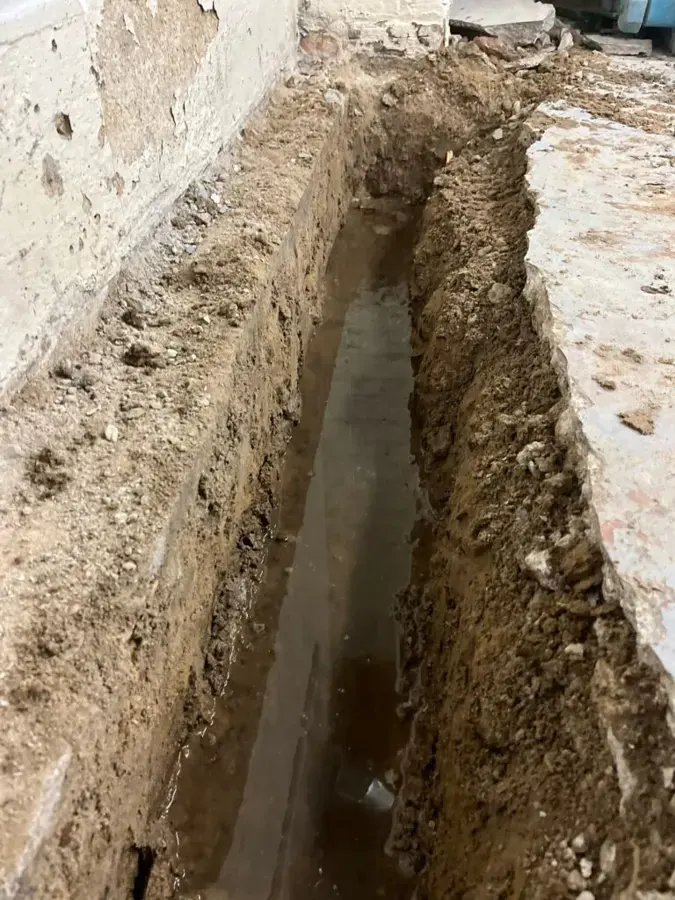
First steps for slab leak water damage in Flower Mound, TX
- 01Spot the signs Warm floor patches, damp baseboards, the sound of running water or a climbing water bill point toward a leak under the slab.
- 02Stop and repair A plumber locates the leak, shuts the water off and repairs the pipe under a Town permit.
- 03Map the wet area Moisture meters and thermal imaging outline the affected slab and flooring.
- 04Dry and document Flooring comes up where wet, dehumidifiers run, and slab readings are logged until dry.
Slab-on-grade is the regional North Texas pattern, so a leaking supply pipe under the concrete usually shows up first as a warm floor, a hissing sound, a rising water bill or damp baseboards. Water has nowhere to go but up through expansion joints and flooring seams, and in established neighborhoods built out in the late 1990s and early 2000s it can travel quietly before anyone notices.
What does slab leak water damage cost in Flower Mound, TX?
Slab leak drying costs less when the leak is found early and only one patch of flooring is wet, and more when water has spread under cabinets, into walls and across several rooms. The plumber's repair is billed separately.
Early find, small patch
- Slab moisture map
- Flooring lifted in one patch
- Slab dried to a reference
Two or three rooms
- Flooring and baseboards pulled
- LGR and desiccant units
- Slab readings every day
Wide spread into cabinets and walls
- Cabinet bases opened
- Wall bottoms dried in place
- Drying log for the claim
These are typical ranges, not a quote. The water category, the wet square footage, the material class and how soon drying started move the final number most.
Run the water damage cost calculatorHow slab leak water damage is handled in Flower Mound
Confirm the leak
The plumber's finding and the Town permit for the pipe repair are noted, because drying starts after the repair and the dates feed the claim.
Map the slab
Pin and non-invasive meters trace moisture across the slab, flooring and low walls, and the map is photographed for the file.
Open the floor
Wet flooring and baseboards are removed, toe kicks are opened, and LGR and desiccant dehumidifiers run with air movers aimed at the floor.
Verify and release
Daily slab readings are compared with a dry reference point, and equipment leaves only after the numbers match and are logged.
What the pipe repair means for the drying
Repairing the pipe is a plumber's job, and it comes first.
- The Town says plumbing work, including water and sewer pipe repairs, requires a permit.
- Emergency permits exist for occupied buildings left without water, gas or sewer.
- Drying begins once the pipe is repaired, so the slab is not rewetted.
- Keep the plumber's invoice and permit with the drying log for the adjuster.
Those records show when the leak was fixed and when drying began, which makes the insurance sequence clear.
Where the water travels
Water rising through a slab spreads sideways under flooring first, so the wet area is often larger than the stain. It wicks into baseboards, cabinet toe kicks and the bottom of drywall, and sealed hardwood or laminate can cup while the slab beneath is still saturated.
A moisture map of the floor, taken with a pin meter and a thermal camera, marks the true edge of the wet area before any flooring is lifted, which keeps removal limited to what actually needs it.
Drying a concrete slab
Concrete holds water far longer than wood or drywall, so structural drying for a slab is slower than other jobs and relies on LGR and desiccant dehumidifiers.
- Flooring and baseboards come up only where the map shows moisture.
- Cabinet toe kicks are opened so the base can dry from the inside.
- Slab readings continue until they match a dry reference spot.
A leak that ran for a long time is judged for hidden damage, since water that sat for a long period can reach framing and insulation; sudden failures are covered on the burst pipe page.
Slab Leak Water Damage across Flower Mound and nearby cities
Slab leak visits cover Wellington, Chimney Rock, Stone Hill Farms and the established streets around FM 1171 and Long Prairie, as well as newer homes in Canyon Falls, wherever flooring has gone damp or a floor has turned warm.
The same service nearby: slab leak water damage in Grapevine, Trophy Club, Southlake.
Water damage restoration in Flower MoundRelated water damage services in Flower Mound
Slab Leak Water Damage questions in Flower Mound, TX
Water still moving in Flower Mound?
A warm floor or damp baseboard may mean water under the slab. Describe the signs and the crew will outline the next steps.
(888) 527-9134 Ask about slab dryingHow can a slab leak be recognized?
Warm spots on the floor, the sound of running water when nothing is on, damp baseboards, buckling flooring or a sudden jump in the water bill all point to a leak under the concrete.
Who fixes the pipe and who dries the floor?
A plumber repairs the pipe, and the Town says plumbing work on water or sewer pipes needs a permit. The restoration crew handles extraction, removal and drying once the water is shut off.
Does a slab leak always mean the floors come up?
No. If the moisture map shows only a small patch, flooring is lifted just there, and sealed floors can sometimes be dried in place with mats. Large or long-running leaks usually need more removal.
Why does drying a slab take longer than drywall?
Concrete is dense and holds water deep inside, so it releases moisture slowly. Low-humidity dehumidifiers and steady airflow are needed, and the readings, not a set number of days, show when the slab is dry.
Is a slab leak covered by homeowners insurance?
Coverage varies by policy. Many policies cover the resulting water damage but treat the cost of reaching and repairing the pipe differently, so the adjuster should see the plumber's report and the drying records.
What should be done before the pipe is repaired?
Shut off the water at the main valve, photograph any damp areas, and move rugs and furniture off wet flooring. Avoid running appliances that use water until the pipe is repaired.
Dry the floor after the repair
Once a plumber has fixed the pipe, drying in Flower Mound homes starts with a moisture map and ends with a log the adjuster can use.
(888) 527-9134Call after the pipe is fixed