Water Extraction and Removal in Flower Mound, TX
Standing water from a failed pipe, a storm or an overflowing fixture is pumped and vacuumed out of Flower Mound homes and businesses, then the wet materials are mapped so drying can begin on a measured plan.
(888) 527-9134Flower Mound water extraction help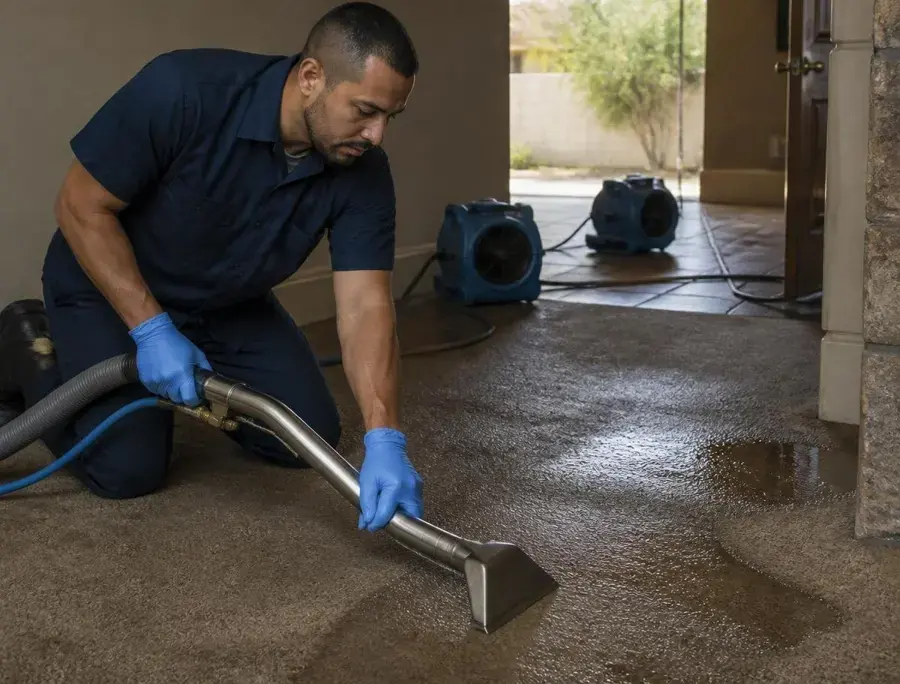
First steps for water extraction and removal in Flower Mound, TX
- 01Call and describe The caller describes the water source, the rooms affected and whether the water came from a clean or contaminated source.
- 02Survey the wet area Meters and a thermal camera show where water traveled beyond what is visible.
- 03Extract the water Truck-mounted units, pumps and wands remove standing and absorbed water, and soaked pad is cut out.
- 04Hand off to drying A moisture reading confirms what is left, and equipment is set to finish the job.
Extraction is the step that sets the size of every later repair. Water that is vacuumed from carpet, pad, tile and concrete before it wicks upward stays out of drywall and framing, and materials that are still salvageable stay in place. In Flower Mound, where heavy rain can flood a garage or a creek-side yard quickly, pulling the water out first keeps a wet floor from becoming a wet wall.
What does water extraction and removal cost in Flower Mound, TX?
Extraction cost rises with the area, whether carpet and pad must come out and how contaminated the water is, and the three ranges below show typical scopes.
A single room, clean source
- Truck-mounted pass over the floor
- Moisture survey of the room
- Drying equipment set afterward
Carpet and pad across rooms
- Pad and carpet extracted
- Wet baseboards pulled
- Readings taken every day
Wide area or gray water
- Soaked pad removed for replacement
- Surfaces treated with antimicrobial
- Drying across connected rooms
These are typical ranges, not a quote. The water category, the wet square footage, the material class and how soon drying started move the final number most.
Run the water damage cost calculatorHow water extraction and removal is handled in Flower Mound
Triage the water
The source is stopped or identified, the category is judged, and the crew decides between pumps, truck-mounted units or hand tools.
Pull out the bulk
Standing water goes first, followed by the water held in carpet fibers and pad, with passes repeated until the wand stops returning water.
Remove what cannot dry
Pad, insulation or drywall that is saturated or contaminated is cut out so it cannot hold water against the framing.
Meter and plan drying
Fresh readings set the equipment count, and the drying log begins with the first day's numbers.
How the water comes out
The crew starts with a moisture survey, then chooses the tool for each surface.
- Truck-mounted units lift standing water and saturated carpet fibers at high volume.
- Submersible pumps clear deep water from garages and low rooms before wands go in.
- Weighted wands and squeegees pull water from tile, vinyl and sealed hardwood.
- Pad that is soaked is cut and removed, since it holds water against the subfloor.
Every extracted area is re-metered, because water that looks gone often sits in the pad or the slab edge.
Water that arrives from outside
Heavy rain can send water into garages and ground-floor rooms near the Town's flood hazard areas, and that water often carries silt and bacteria, so it is treated as contaminated and the affected materials are removed rather than dried.
Clean water from a supply pipe or an overflowing fixture is handled differently, because the materials can often be extracted and dried in place, which keeps the repair closer to the low end of the cost range.
After the water is out
Extraction ends the flooding but not the moisture problem, so a drying plan follows with equipment sized to what remains.
- Baseboards are pulled where water wicked behind them.
- Air movers and a dehumidifier are placed after a second moisture reading.
- Structural drying continues until each material reaches its dry standard.
Large events involving sewage or contaminated flood water follow a different protocol, with containment and protective gear before any extraction starts.
Water Extraction and Removal across Flower Mound and nearby cities
Extraction crews work across Wellington, Bridlewood, Canyon Falls and the neighborhoods along Cross Timbers Road, as well as the commercial blocks along FM 2499, with pumps and wands loaded for garages as readily as for living rooms and bathrooms.
The same service nearby: water extraction and removal in Grapevine, Trophy Club, Southlake.
Water damage restoration in Flower MoundRelated water damage services in Flower Mound
Water Extraction and Removal questions in Flower Mound, TX
Water still moving in Flower Mound?
A flooded room does not dry itself. Describe the water and the crew will outline the extraction steps.
(888) 527-9134 Flower Mound extraction helpHow soon should extraction start after a leak?
As early as possible. Water keeps moving into drywall, pad and subfloor while it stands, so every added delay increases the amount of material that has to be removed instead of dried.
Can carpet be saved after an extraction?
Often, if the water was clean and the carpet is extracted promptly. The pad underneath is usually replaced because it soaks up water and dries slowly, while the carpet itself can be lifted, dried and reinstalled.
What if the water came from a creek or storm drain?
That water is treated as contaminated. Porous materials such as carpet, pad and drywall touched by it are removed, hard surfaces are cleaned and treated, and the work follows the storm and flood cleanup process.
Does extraction replace the need for drying equipment?
No. Extraction removes liquid water, but the moisture held inside wood, drywall and concrete evaporates only with air movers and dehumidifiers, which is why a moisture reading follows every extraction.
Which rooms are extracted first?
Standing water and soaked carpet come first, followed by the rooms the water traveled into, so the wettest material stops feeding moisture to the rest of the house.
What should be saved for the insurance adjuster?
Photos of the water and the damage, the moisture map, the list of removed materials and the daily readings. Keeping pad, carpet or drywall samples until the adjuster visits is also advisable when possible.
Get the water out of the floor
Flower Mound homes and businesses can reach the extraction crew at any hour, with truck-mounted gear, pumps and a moisture meter ready for the first pass.
(888) 527-9134Ring the extraction crew