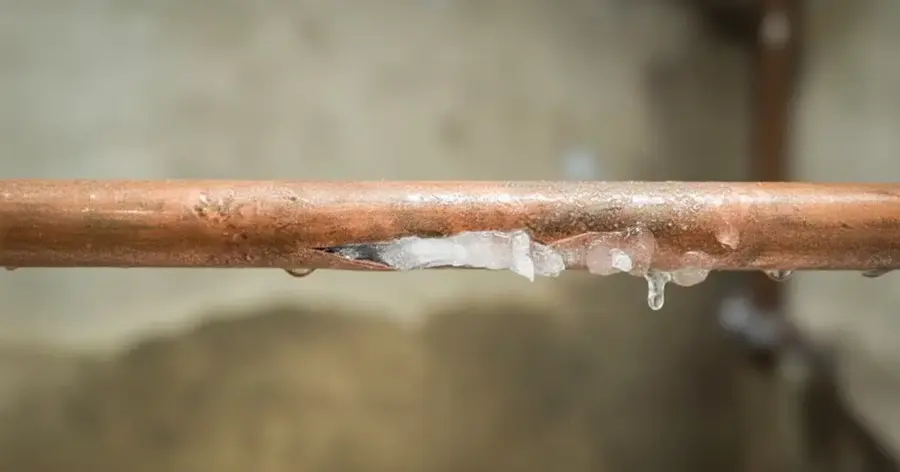
On Saturday, January 24, 2026, a 14 inch water main broke at Trophy Club Drive and Indian Creek Drive during a North Texas winter storm, and several inches of water flowed across the road. Only road flooding was reported. The same cold that split a large main can split a small pipe inside a garage wall, and the result inside a house looks very different.
Key takeaways
- A 14 inch water main broke at Trophy Club Drive and Indian Creek Drive on January 24, 2026, at 17 degrees with sleet, and water flowed across the road.
- A main break is repaired by the utility, TCMUD, while a burst pipe inside a house starts with the owner finding the shutoff.
- Know where the main shutoff valve is before a freeze, because ice can hold a split closed and the leak may begin as it thaws.
- Residents were asked to conserve water while on-call crews worked overnight on the repairs.
- Wet floors, ceilings and walls dry best when extraction starts early and moisture readings direct the equipment.
What happened on January 24, 2026
Around 5 p.m. on that Saturday, a 14 inch water main broke at Trophy Club Drive and Indian Creek Drive, and several inches of water flowed across the road. The National Weather Service lists a North Texas winter storm for January 23 to 26, 2026.
The Town reported 17 degrees with sleet and a wind chill of 4 degrees as on-call crews worked overnight on repairs. Residents were asked to conserve water.
Only road flooding was reported. The event is useful as a reminder of how fast a hard freeze can break pipes of any size.
A main break and a burst pipe are different problems
Trophy Club Municipal Utility District No. 1, known as TCMUD, provides both water and wastewater service. Its crews repair the pipes under the street.
TCMUD says its system delivers about 55 psi or more of pressure, most of its water pipes are looped so a broken pipe can be isolated while a second pipe keeps water flowing, and a standby diesel generator backs up its pump station during outages.
None of that protects the pipes inside a house. Those belong to the owner, and so does the shutoff.
For a homeowner the practical order is simple. If the water is inside the house, the owner closes the house valve first, then calls a plumber for the repair and a restoration crew for the water.
- Utility main: under the street, repaired by district crews.
- House pipe: inside walls, attics, garages and under floors, repaired by a plumber.
- Cleanup: extraction, removal of wet materials and drying by the restoration crew.
- Water pressure: steady pressure pushes a lot of water through a split pipe until the valve is closed.
Where home pipes fail in a hard freeze
Pipes freeze where heat does not reach. A split in one of those spots can drain a lot of water into a wall or ceiling before anyone notices.
The pattern is the same in any house: the colder and more exposed the pipe, the earlier it fails.
A pipe under steady pressure keeps pushing water through a split until the valve is closed, which is why a split above a finished ceiling can bring the drywall down.
- Garage walls and ceilings that stay cold.
- Attic pipes above insulation.
- Pipes in exterior walls.
- Outdoor faucets and the short pipes behind them.
The shutoff and first steps when a pipe lets go
Closing the main valve stops new water from entering. Opening the lowest faucet drains what is left in the pipes.
A burst pipe job starts with stopping the water, then moves to extraction and drying.
- Shut the main valve and open the lowest faucet.
- Turn off power to wet outlets and any fixtures under a wet ceiling.
- Move furniture, rugs and electronics out of the wet area.
- Photograph the damage before anything is moved.
- Note where the water went. Below a split in the ceiling it follows light fixtures, vents and the tops of walls.
Why the damage often shows after the thaw
Ice can plug a split pipe. The water starts moving again as temperatures climb, and a leak that was invisible overnight turns into a flood by afternoon.
That is why the hours after a thaw are the time to watch ceilings, wall bases and floors near cold runs of pipe.
Frozen pipe damage calls for a check of the walls and ceilings around any frozen run, not only the spot where water is visible.
Signs of a hidden split
A pipe that froze but did not visibly leak can still be cracked behind a wall.
- A faucet that runs slowly or sputters after the thaw.
- A damp spot or stain on a wall or ceiling that was dry before the freeze.
- The sound of running water when every fixture is off.
- A water meter that keeps moving with everything closed.
What extraction and drying cover
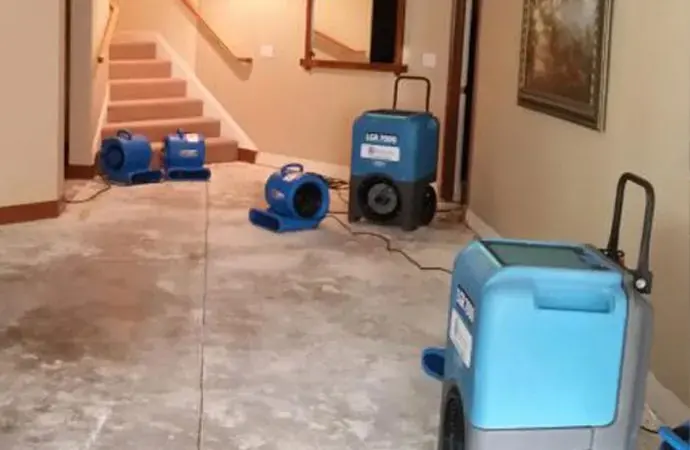
Extraction pulls standing water from floors and carpet, and drying removes moisture trapped in drywall, insulation and framing. Moisture readings decide where equipment goes and when it can come out.
Insulation, ceiling drywall and carpet that held water are removed when they cannot dry in place, and the readings decide what stays.
The page for water damage restoration in Trophy Club lists the services available for a wet home, and the main page for frozen pipe damage restoration explains the full process.
Before the next freeze
A few minutes of preparation in the fall is worth far more than a cleanup in January. The checks below take little time and need no tools.
- Find the main shutoff valve and make sure every adult in the home knows where it is.
- Cover or disconnect outdoor hoses and faucets before the first hard night.
- Open cabinet doors on exterior walls so room air reaches the pipes.
- Let a faucet drip during a hard freeze so water keeps moving.
- Insulate exposed pipes in garages and attics where heat does not reach.
Questions
What happened on January 24, 2026?
A 14 inch water main broke at Trophy Club Drive and Indian Creek Drive during a winter storm, and several inches of water flowed across the road.
Did homes flood in that main break?
Only road flooding was reported. The event is a reminder of how fast a hard freeze can break pipes.
Who fixes a main break and who fixes a burst pipe in a house?
TCMUD repairs the district pipes under the street. A pipe inside a house is repaired by a plumber, and the restoration crew handles the water.
Why do pipes leak after the thaw?
Ice can hold a split closed. As it melts and pressure returns, water flows through the crack.
What should be done first when a pipe bursts?
Shut the main valve, open the lowest faucet, turn off power to wet areas and photograph the damage before moving anything.
How is a hidden split found after a freeze?
Signs include a faucet that sputters, a new stain on a wall or ceiling, the sound of running water with every fixture off and a meter that keeps moving. A plumber confirms the location and the restoration crew checks the surrounding walls.