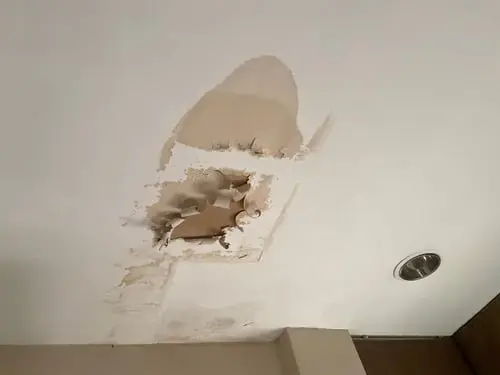
The 2024 American Community Survey 1 year estimate counts 59,834 renter occupied homes and 33,405 owner occupied homes in Irving, and about 51,502 of the city's housing units sit in buildings of five or more units. With that many homes stacked or attached, water from a neighbor's tub, washer or dishwasher often arrives through a ceiling. The first steps are the same whether the home is rented or owned.
Key takeaways
- The 2024 American Community Survey 1 year estimate counts 59,834 renter occupied and 33,405 owner occupied homes, so renters are the majority.
- About 51,502 housing units, roughly half, are in buildings of five or more units, where one leak can reach several homes.
- Shut off water to the source if it is reachable, keep clear of a bulging ceiling and turn off power to wet fixtures.
- Tell the property manager right away and photograph every wet surface before anything is moved.
- Water travels inside wall cavities and between floors, so drying has to be checked in every affected unit.
Why leaks cross units in larger buildings
In a building with several floors, water follows gravity. It runs along floor framing, drops through gaps around pipes and fixtures and spreads across the ceiling below.
The longer the water runs, the more units it reaches.
A drip that starts in one bathroom ceiling can become a wet wall in the unit beside it, and a leak on an upper floor can wet every floor below by the time it is noticed.
The same estimate puts the median home build year at 1987, so many buildings are decades old, and aging supply hoses, drains and fixtures tend to fail more often.
- An overflowing tub or sink.
- A washer hose or drain that fails.
- A dishwasher or refrigerator supply leak.
- A water heater tank that splits.
- A supply pipe or drain inside a wall.
Stopping the water first
Water that is still flowing keeps adding to the damage, so the source comes first. The tenant or owner above is often unaware, and a quick knock on the door can end the leak.
A neighbor who is away is the hardest case. The property manager can often shut off water at a building valve or enter the unit above, which is one more reason to call right away.
If the water is coming from a city side main or a wastewater backup, the Irving Water Utilities Department lists water main breaks, leaks and wastewater backups among what it handles.
- Ask that the water to the unit above be shut off if the neighbor or manager can reach the valve.
- Turn off power to wet light fixtures and outlets at the breaker.
- Keep clear of a ceiling that bulges or sags.
- Place buckets under drips and move furniture and electronics aside.
- Use a dry room for anything that needs power.
Who to tell and what to document
The property manager or owner should be told in writing as soon as the leak is found. A note with the date and time creates a record that the problem was reported.
A clear record also helps when several units are involved, because each home can show when the damage started and what was wet.
- Photograph and video the ceiling, walls, floors and damaged contents.
- Write down what was wet and when the leak was noticed.
- Keep the names of everyone contacted and the time of each contact.
- Save damaged items until the damage has been recorded.
- Take new photographs once drying starts to show the progress.
What happens to a wet ceiling
A ceiling takes the first hit and shows the most obvious damage. Ceiling leak work cuts back only what has to come out and dries what can stay.
Drywall and insulation
Wet ceiling drywall softens and sags. Once it is saturated it usually has to be cut out, because it will not regain strength and can fall.
Insulation above it holds water like a sponge and is removed if it cannot dry.
Contents and furniture
Furniture, rugs and electronics under a leak soak up water from below as well as above. Moving them to a dry room early prevents warped wood and stained fabric.
Light fixtures and fans
Water pooled above a light fixture can reach wiring. The breaker stays off and the switch stays untouched until a qualified person has checked the circuit.
Drying walls, floors and the units on either side
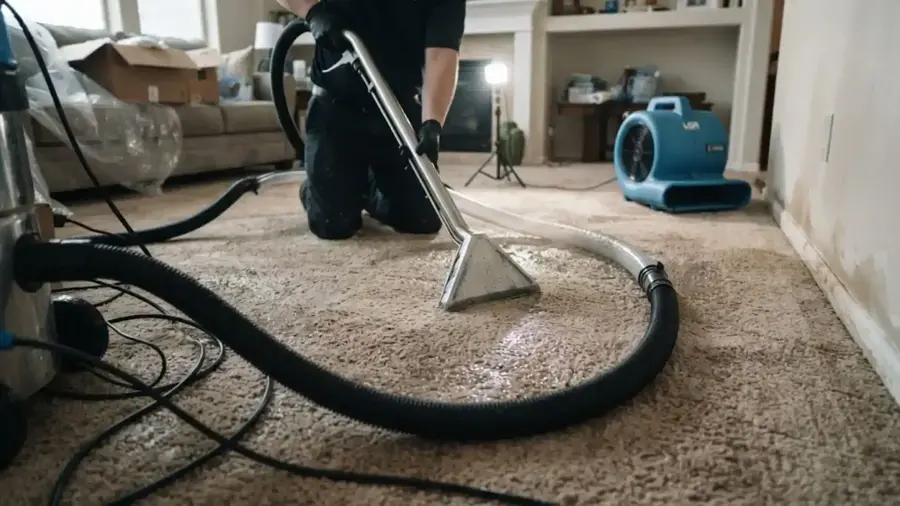
Water that fell through a ceiling does not stay there. It runs down wall cavities into the unit below that one and across to neighboring walls.
Structural drying means readings in every wet cavity, equipment placed in each affected home and a plan agreed with building management.
Drying equipment in one home is noisy and warm, which affects neighbors too. Sharing a plan and a timeline with management and with the people next door makes the work easier for everyone.
- Moisture readings in ceilings, wall cavities and floors of each affected unit.
- Air movers and dehumidifiers placed in every wet room.
- Coordination of access with the property manager and neighbors.
- Daily readings until each unit reaches its dry standard.
When the source is an appliance
A failed washer hose, a dishwasher supply or a refrigerator ice maker can release water for hours before anyone notices, especially in a unit where nobody is home.
Appliance leak cleanup starts by finding the source, then extracting and drying in the unit where it started and in every unit it reached. The city page for water damage restoration in Irving lists the other services available.
- Look behind the washer for a damp wall or a loose hose.
- Check the dishwasher supply connection under the sink.
- Pull the refrigerator out to inspect the ice maker hose.
- Check the water heater closet for rust or a wet floor.
Renters and owners: the same first steps
Renters and owners handle the first hours the same way: stop the source, stay safe, document and notify. What differs is who arranges the repair and who the restoration crew coordinates with.
A renter usually works with the property manager, while an owner may also work with a neighbor or the building's management. Agreeing early on who gives access to each unit prevents delays once the drying equipment is ready.
Questions
What should be done first when water drips through an apartment ceiling?
Stop the source if it can be reached, keep clear of a bulging ceiling, turn off power to wet fixtures, place buckets under drips and photograph the damage. Then tell the property manager.
Who should be told about a leak from the unit above?
The property manager or owner should be told in writing, along with the neighbor above if the source is inside that unit.
Can a wet ceiling be left to dry on its own?
A saturated ceiling can sag and hide wet insulation or framing above it. Moisture readings show whether it can dry in place.
Why do neighboring units need to be checked?
Water runs along framing and inside wall cavities, so it can reach the units beside and below the one where the ceiling stained. Readings in each home show whether it did.
How many homes are in larger buildings?
About 51,502 of the city's 103,492 housing units are in buildings of five or more units, roughly half of all units.
Who handles a city water main break?
The city's Irving Water Utilities Department lists water main breaks, leaks and wastewater backups among what it handles.