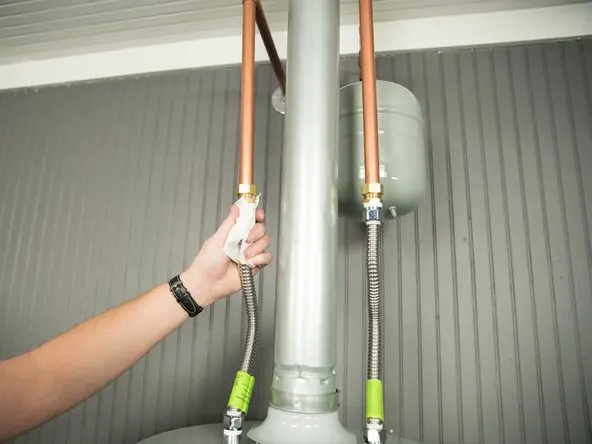
A failed water heater tank can put a full tank of water on a garage, closet or utility room floor in a short time. In Flower Mound the replacement is also a permitted job with an inspection, so the wet floor and the paperwork have to be planned together. Sorting out the order early keeps the dry-out and the new tank from slowing each other down.
Key takeaways
- Replacing a water heater requires a Town permit, and state law requires the Town to inspect water heater replacements.
- A contractor must be a plumber registered with the Town, must get the permit before the work and must pass an approved final inspection.
- A homeowner doing the work personally must show proof of a homestead exemption when applying for the permit.
- Emergency permits cover water heater replacements and plumbing repairs for an occupied building without gas, water or sewer, and are reviewed within 24 hours.
- A leaking tank is replaced, not patched, and cleanup of the wet floor can start while the permit is processed.
What a leaking tank does to a floor
A tank water heater holds enough water to soak a closet, garage or utility room floor quickly. A seam or fitting that starts as a weep can open into a steady stream, and the water runs toward the nearest low spot.
Where the tank sits changes the damage. In a closet, water runs into wall framing and under flooring.
In a garage, it spreads across the floor and under stored items.
Early detection matters. A tank that weeps for weeks can rot a closet floor or soak the bottom of a wall without any visible puddle, so a damp spot near the heater deserves attention.
- Rust colored water or rust stains at the base of the tank.
- A puddle or damp spot that returns after it is wiped up.
- A relief valve that drips or weeps.
- Damp drywall or soft baseboard near the heater.
The permit and inspection rules for replacing a tank
Replacing a water heater requires a Town permit, and state law requires the Town to inspect water heater replacements. The Town also says plumbing work, including water heaters and water and sewer repairs, requires a permit.
When a contractor does the work
An emergency replacement while the permit office is closed is the exception. In that case the permit is obtained the next business day.
- The contractor must be a plumber registered with the Town.
- The permit must be pulled before the work starts.
- An approved final inspection closes the job.
When a homeowner does the work
A homeowner doing the work personally must show proof of a homestead exemption when applying for the permit. The inspection requirement still applies.
Emergency permits when service is off
The Town's emergency permits cover water heater replacements and plumbing repairs for an occupied building that has no gas, water or sewer service. Applications are reviewed within 24 hours, often the same business day.
When service to an occupied building has been disconnected, the Town can do an emergency inspection and then release the service to the utility company. That step matters when a tank has failed and the gas or water was shut off for safety.
The emergency route exists because an occupied home without hot water cannot wait for the office to reopen, and filing by the next business day keeps the record complete.
First steps when the tank lets go
Closing the cold water supply valve on top of the tank stops new water from entering. Shutting off the gas or power to the heater prevents damage to the burner or the elements.
Water extraction does not need to wait for the plumber, and starting early limits how far the water spreads.
If the heater sits in a closet, water often runs into the wall behind it and under the flooring next to it, so the area around the closet is checked as well.
- Close the cold water valve above the tank.
- Turn the gas control to off, or switch off the breaker for an electric heater.
- Move boxes, rugs and electronics out of the wet area.
- Photograph the tank, the floor and anything damaged before cleanup begins.
- Stay out of standing water near outlets and the electrical panel.
What extraction and drying cover
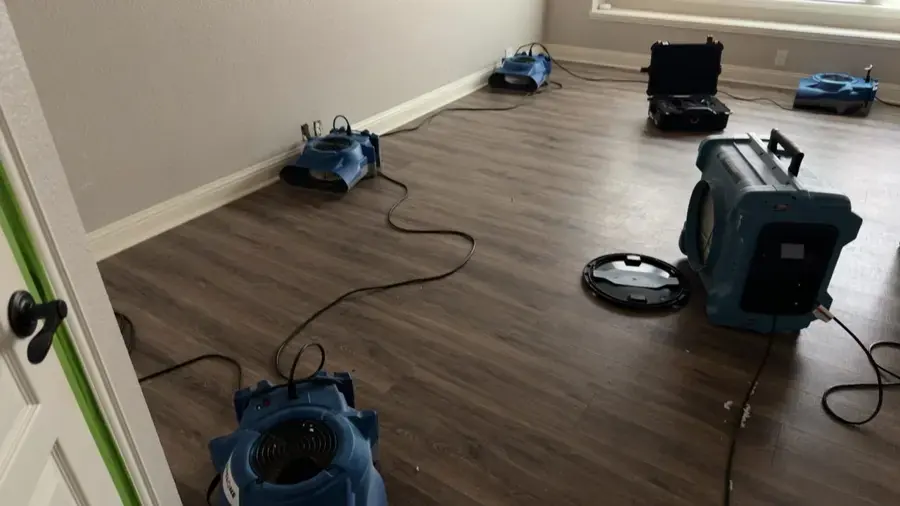
The crew pulls the standing water first, then checks baseboards, drywall, subfloor and anything stored on the floor. Water heater leak cleanup follows the water to wherever it wicked, not only the visible puddle.
In a garage, a concrete floor dries quickly, but cardboard boxes, drywall at the base of the wall and attached framing hold moisture much longer.
- Extraction of standing water from floors and low spots.
- Moisture readings on baseboards, drywall and subfloor.
- Removal of wet material that cannot dry in place.
- Air movers and dehumidifiers until readings return to normal.
Why a leaking tank is replaced, not patched
A tank is lined steel. When the lining and the steel fail, water seeps through the shell and no patch holds.
An older tank is more likely to fail from internal corrosion, and the failure often comes with little warning.
- A leak from the tank body means replacement.
- A leak at a fitting or valve may be repaired by a plumber.
- A tank replaced before it fails avoids both the emergency and the cleanup.
Lining up the plumber, the permit and the cleanup
A leak involves three tracks that run at once: the replacement tank and its permit, the inspection, and the dry-out. Lining them up avoids dismantling a finished repair.
A moisture log gives the plumber and any later buyer a record that the area was dried. The inspection and the drying records both end up in the property file, so a later reader sees a permitted replacement and a documented dry-out rather than an unexplained stain.
The main page for water heater leak cleanup covers the full process, and the page for water damage restoration in Flower Mound lists the other services available.
- Ask the installer whether the permit has been pulled before the old tank comes out.
- Confirm the final inspection is scheduled once the work is complete.
- Keep the drying log with the permit paperwork.
Questions
Does replacing a water heater in Flower Mound require a permit?
Yes. The Town requires a permit, and state law requires the Town to inspect water heater replacements. Plumbing work in general, including water and sewer repairs, also requires a permit.
Who can pull the permit?
A plumber registered with the Town can, and so can a homeowner doing the work personally who shows proof of a homestead exemption.
What if the tank fails when the permit office is closed?
For an emergency replacement while the office is closed, the permit is obtained the next business day.
What do emergency permits cover?
They cover water heater replacements and plumbing repairs for an occupied building without gas, water or sewer, and they are reviewed within 24 hours.
Can cleanup start before the new tank is installed?
Yes. Extraction and drying do not depend on the permit, and starting early limits how far the water spreads into walls and flooring. The plumber and the restoration crew can work on separate tracks.
Can a leaking tank be patched?
A leak through the tank body means replacement. A leak at a valve or fitting may be repaired by a plumber.