The City of Coppell says grease from poorly maintained grease traps in restaurants and other businesses is one of the most common causes of sewer overflows. For a business owner, a backup means a closed kitchen or sales floor, spoiled stock and a floor covered in wastewater. Fast, orderly steps limit how long the doors stay closed.
Key takeaways
- According to the city, grease from household drains and poorly maintained grease traps is one of the most common causes of sewer overflows.
- The city says sluggish drains or an overflow near the edge of the property can come from a blockage or tree roots, and should be reported to the Utility Operations Division of Public Works.
- A sewage backup in a business is handled as contaminated water: the area is closed, porous materials are removed and surfaces are cleaned and disinfected.
- Old Town has restaurants and shops in a historic district, and the southwestern part of the city has a large commercial zone of shipping and distribution facilities.
- Keeping a business open often means containment and drying in phases, so one area can reopen first.
Why grease causes commercial sewer overflows
Grease cools as it moves down a drain and sticks to the inside of the pipe. Layer after layer narrows the pipe until wastewater cannot pass.
A grease trap is meant to catch grease before it enters the sewer. When it is poorly maintained, grease passes through and builds up downstream.
The cost of a blocked trap lands on the floor. A backed up drain can release wastewater across a kitchen quickly, and it spreads under equipment and toward doorways.
- Slow floor drains in a kitchen or dish area.
- Odors from drains or from the grease trap.
- Sinks or dishwashers that back up when another fixture drains.
- Wastewater at a floor drain or cleanout.
What the city says to report
The city says sluggish drains, or an overflow near the edge of the property coming from the city cleanout, can come from a blockage or tree roots in the sewer pipe. Such problems should be reported to the Utility Operations Division of Public Works.
Public Works Operations staff maintain the sewer system to prevent backups and overflows, and the city delivers its sewage to the Trinity River Authority for treatment.
Some blockages sit inside the building's own drains and need a plumber. Reporting still helps the city check its own pipes.
Reports help most when they say what was seen: where the water appeared, which fixtures were affected and when it started. That detail lets staff judge whether the problem is on the street side or on the property.
First steps during a backup in a restaurant or shop
The first goal is to stop adding water to the system and to keep people away from the contaminated area.
Time matters because wastewater soaks into floor coverings, grout and the base of walls. Early extraction keeps it from reaching more material.
- Stop using sinks, floor drains, dishwashers and toilets in the affected area.
- Close the affected area and keep staff and customers out.
- Move food, inventory and records to a dry, clean place.
- Photograph the area, the drains and anything damaged.
- Report the problem to the city and call a plumber for the blockage.
Where it happens: Old Town and the commercial zone
A backup does not look the same in every kind of business. Space, stock and foot traffic change the plan.
Old Town restaurants and shops
Old Town Coppell is the historic district, with businesses, restaurants and homes along walkable streets, and the Coppell Farmer's Market meets there on Saturdays. A blocked kitchen drain can put wastewater on the floor of a busy dining room.
Food on shelves and in coolers near floor drains has to be checked and sorted early.
Warehouses and distribution space
Many corporations have shipping and distribution facilities in a large commercial zone in southwestern Coppell. In a warehouse, wastewater on a large floor can reach pallets, racking and stock before it is noticed.
Cardboard and wood pallets soak up water, so stock on the floor is sorted and checked before the area is cleaned.
Cleanup, containment and drying while a business stays open
Contaminated water calls for containment. Barriers and controlled airflow keep the work area separate from clean areas, so part of the business can often keep operating.
Equipment placement also keeps odor and moisture out of areas that stay open to customers.
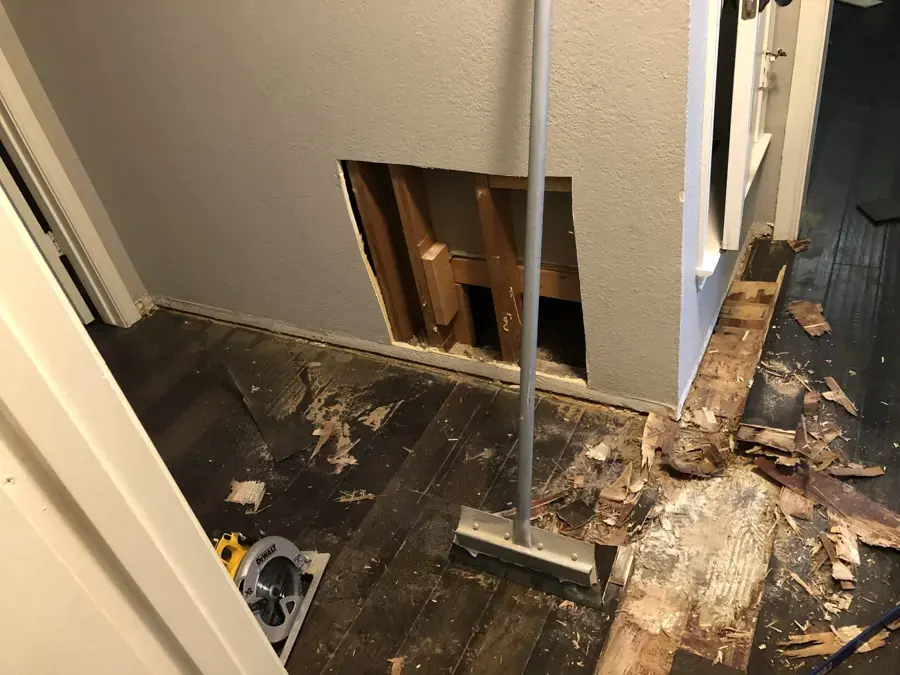
Commercial water damage work is planned around the business: phases, access routes and the hours when staff are present. Sewage backup cleanup removes contaminated material, disinfects the surfaces and then dries the structure.
- Containment barriers and controlled access to the work area.
- Extraction of wastewater and removal of porous materials.
- Cleaning and disinfecting of floors, walls and equipment bases.
- Drying with moisture readings until the structure is back to normal.
Reopening after the cleanup
A business reopens when the area is cleaned, dry and without odor. Moisture readings and a written record of the work document that the space is ready.
The record also helps with later repairs and with any reports the business needs to make.
Staff safety comes first throughout. Employees stay out of the wet area, avoid contact with the water and wash hands afterward.
- Readings show every wet material has dried.
- The cleaned area has no sewage odor.
- A plumber has checked the fixtures and drains.
- Stock that touched wastewater has been discarded rather than reused.
Preventing the next overflow
Prevention costs less than cleanup, and a written maintenance log shows that the trap was kept up. Staff who know which drains are for water only, and who track trap cleanings, catch problems earlier.
The page for water damage restoration in Coppell lists the other services available, and the main page for commercial water damage restoration covers the full process.
- Keep grease and oil out of drains and clean the trap on a regular schedule.
- Keep a written log of trap cleanings and pump out visits.
- Keep cleanout covers accessible and clear.
- Schedule drain cleaning for the pipes that serve kitchen areas.
- Train staff on what may and may not go down a drain.
- Watch for early signs: slow drains, odors and gurgling.
Questions
What does the city say causes most sewer overflows?
It names grease from household drains and from poorly maintained grease traps in restaurants and other businesses as one of the most common causes.
Who should be told about a sluggish drain or an overflow near the edge of the property?
The city asks that it be reported to the Utility Operations Division of Public Works.
Is sewage cleanup different in a business?
Yes. Contaminated water needs containment, removal of porous materials and disinfection, and a business also needs a plan that protects stock and keeps unaffected areas open.
Can a business stay open during cleanup?
Often part of it can. Containment separates the work area from clean areas, and drying is scheduled in phases.
Can tree roots cause a business backup?
Yes. The city says a blockage or tree roots in the sewer pipe can cause sluggish drains or an overflow near the edge of the property, so a business with a clean trap can still see a backup.
What happens to the city's sewage?
The city delivers its sewage to the Trinity River Authority for treatment, and Public Works Operations staff maintain the system to prevent backups and overflows.