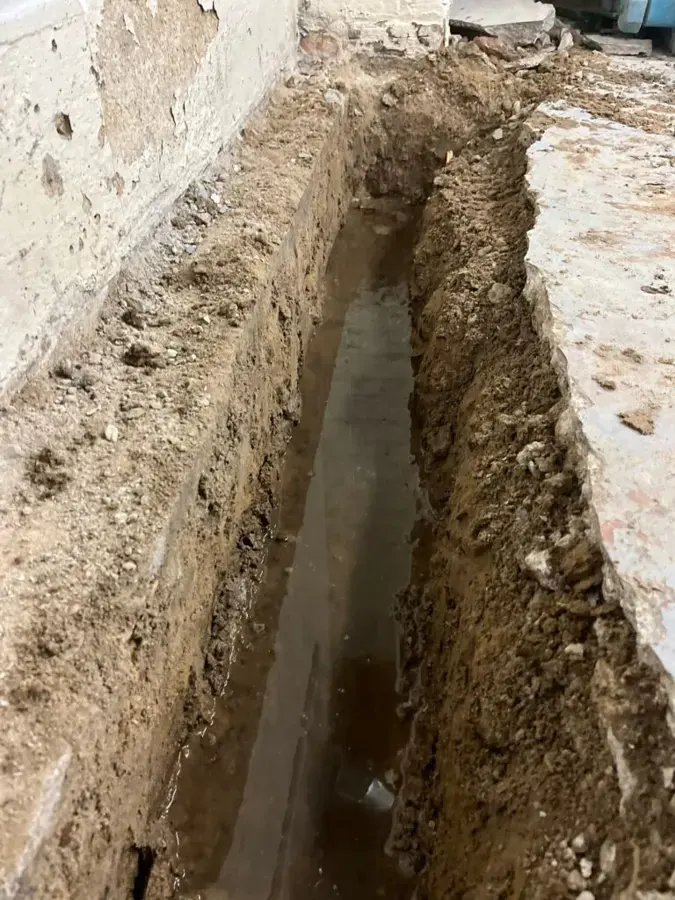
Many Grapevine homes are slab-on-grade, with supply pipe running under or through the concrete floor. Most of the housing stock dates from the 1970s through the 1990s, and about a third was built in 2000 or later. When a pipe under the slab leaks, the water has nowhere to go but up and out, and it can soak flooring long before anyone sees a puddle.
Key takeaways
- Slab-on-grade homes carry supply pipe under the concrete, so a leak can soak flooring before any water is visible.
- Signs include a warm spot on the floor, the sound of running water with every fixture off, a meter that keeps moving and damp flooring or baseboards.
- Some late 1970s to mid 1990s homes have polybutylene supply pipe, which is a reason for a plumber to evaluate the whole supply system and not only one spot.
- A plumber traces and repairs the leak, and the restoration crew extracts water and dries the structure.
- Drying has to reach the slab edge, wall bases and cabinets, with moisture readings guiding the equipment.
Why slab leaks are a local pattern
Most homes here date from the 1970s through the 1990s, and about a third were built in 2000 or later. Slab-on-grade construction is common in that housing stock, with the supply pipe under or through the concrete.
About 52.7 percent of homes are owner occupied and 47.3 percent are rented, with many apartments, so the first person to notice a leak may be a renter, an owner or a property manager.
A slab leak is often a slow process. A small pinhole in a pipe under the slab can run for weeks, wetting the soil and the slab edge before it shows at the surface.
Signs of a leak under the floor
A slab leak is hidden, so the signs are indirect. Any one of them is worth a closer look, and two together are a strong signal.
- A warm or hot spot on the floor, which can mean a hot water pipe is leaking below.
- The sound of running water when every fixture is off.
- A water meter that keeps moving with all fixtures closed.
- Damp carpet, buckled flooring or a musty smell along a wall.
- A sudden rise in the water bill.
- A hissing sound from the floor near a wall.
- New cracks or gaps at baseboards or tile grout lines.
A simple meter test
Turn off every fixture and appliance that uses water, then look at the meter. If the dial or leak indicator keeps moving, water is escaping somewhere between the meter and the house.
Older supply pipe in late 1970s to mid 1990s homes
Some homes built from the late 1970s to the mid 1990s have polybutylene supply pipe. A plumber can identify it from the plastic pipe at the water heater, the main valve or under sinks.
When a leak turns up in a home from that era, the question is whether it is a single failure or a sign of pipe that is aging as a whole. That is a decision for the plumber and the owner, and it affects how much of the floor may need to be opened.
Polybutylene is a plastic supply pipe used in some homes of that period. It is not the only pipe that can fail, and not every home from those years has it.
- Where to look: the connections at the water heater, the main shutoff and under sinks.
- What to ask a plumber: whether the pipe is present, what condition it is in and what the options are.
What a slab leak does to the home
Water from under the slab rises through cracks and joints, soaks carpet and pad, lifts wood and laminate flooring and wicks into the bottom of drywall and cabinets.
Because the leak is hidden, it can run for a long time. By the time it is found, the wet area is often larger than the stain suggests, and water extraction comes first.
Pressure in a supply pipe is steady, so the leak does not stop on its own. It keeps feeding the slab and the soil under it until the water is shut off at the main.
- Carpet and pad soaked from below.
- Hardwood or laminate that cups or lifts.
- Baseboards and drywall wet at the bottom.
- Cabinet bases and toe kicks that swell.
Tracing, repair and drying: who does what
Two trades work on a slab leak, and the order matters. The plumber stops and repairs the leak.
The restoration crew deals with the water it released.
The plumber
Plumbers locate the leak with listening equipment or pressure tests, then repair it by opening the slab or by rerouting the pipe through a wall or the attic. A split in a pipe above the floor is handled as burst pipe water damage, which follows a similar cleanup.
The restoration crew
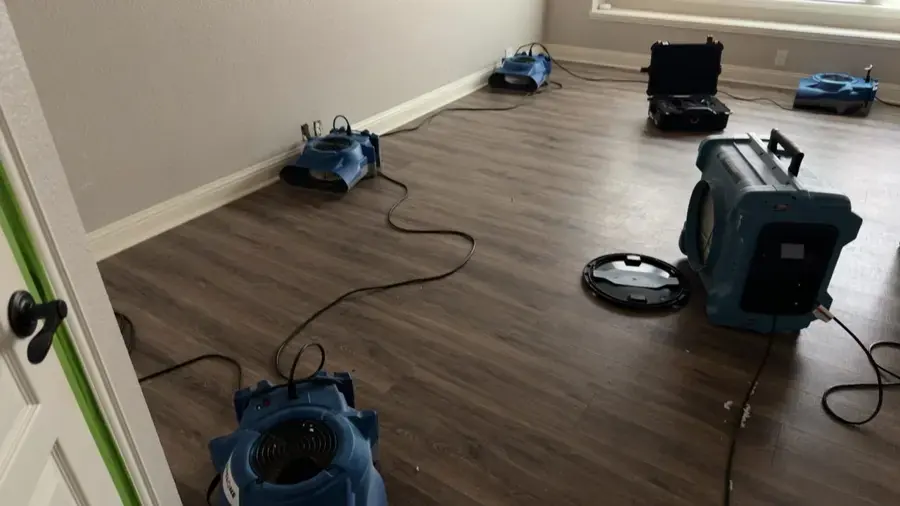
The crew extracts water, removes materials that cannot dry and sets drying equipment. Slab leak water damage work can begin as soon as the water is shut off, even while the repair is being arranged.
Extraction, removal of wet flooring and setting equipment can all proceed on their own track.
- Extraction of water from carpet, pad and flooring.
- Removal of materials that cannot dry in place.
- Moisture readings at the slab edge and wall bases.
- Air movers and dehumidifiers until every reading is dry.
Confirming the structure is dry
Moisture readings track progress on the slab edge, wall bases and cabinets until they match dry reference points. Structural drying closes when the readings do.
- Readings on the slab edge, baseboards and the bottom of drywall.
- Equipment comes out only after every wet area reads dry.
- Flooring is replaced after drying, not before.
Flooring over the slab
Flooring that traps moisture against the slab may need to come up so the concrete can release water. Drying through a covered floor is slow, and the readings show whether it is working.
Questions
What is a slab leak?
A supply pipe that runs under or through a concrete foundation develops a leak. Water rises through the concrete and wets the floor above.
How can a slab leak be spotted?
Common signs are a warm spot on the floor, running water sounds with every fixture off, a moving water meter and damp flooring or baseboards.
Why does polybutylene matter?
Some late 1970s to mid 1990s homes have polybutylene supply pipe. A plumber can identify it and advise whether the whole supply system needs attention.
Who finds and repairs the leak?
A plumber traces and repairs it. The restoration crew extracts the water, removes wet materials and dries the structure.
Does a slab leak always mean tearing up the floor?
Not always. Some repairs rerun the pipe through a wall or the attic, and others open the slab at the leak. The plumber recommends the approach after tracing the leak.
Can flooring be saved after a slab leak?
Carpet pad usually has to be replaced. Hard flooring over the slab may be saved if it is dried quickly, depending on the material.