On June 6, 2018, an early morning storm dropped softball sized hail on parts of Coppell and Carrollton. One Coppell homeowner was told afterward that the roof, siding and gutters would all need to be replaced. A roof that hail has damaged can look acceptable from the street while water finds the damage on the next rain.
Key takeaways
- Softball sized hail fell on parts of Coppell and Carrollton on June 6, 2018, and one homeowner was told the roof, siding and gutters needed replacement.
- A hail damaged roof can leak days or weeks later, so a ceiling stain after a dry spell can still point back to the storm.
- Water usually travels along decking and rafters before it reaches a ceiling, so the stain is rarely directly under the hole.
- Cover openings, collect drips and photograph the stain and the attic before anything is moved.
- Wet insulation and drywall stay wet long after the rain stops, so extraction and drying matter even for a small stain.
What softball sized hail does to a roof
Hail that large does more than dent metal. It bruises shingles, fractures the mat beneath the surface and knocks off the granules that shed water.
The damage is not always visible from the ground, which is why leaks sometimes appear weeks after the storm.
Siding and gutters take damage too. Dented gutters and downspouts do not leak into the house, but they show how hard the storm hit and why the roof deserves a close look.
- Bruised or cracked shingles with soft spots.
- Bare patches where granules were knocked loose.
- Cracked vent housings, damaged flashing and bent drip edges.
- Dented gutters and siding, which can signal how hard the roof was hit.
How water gets from the roof to a ceiling
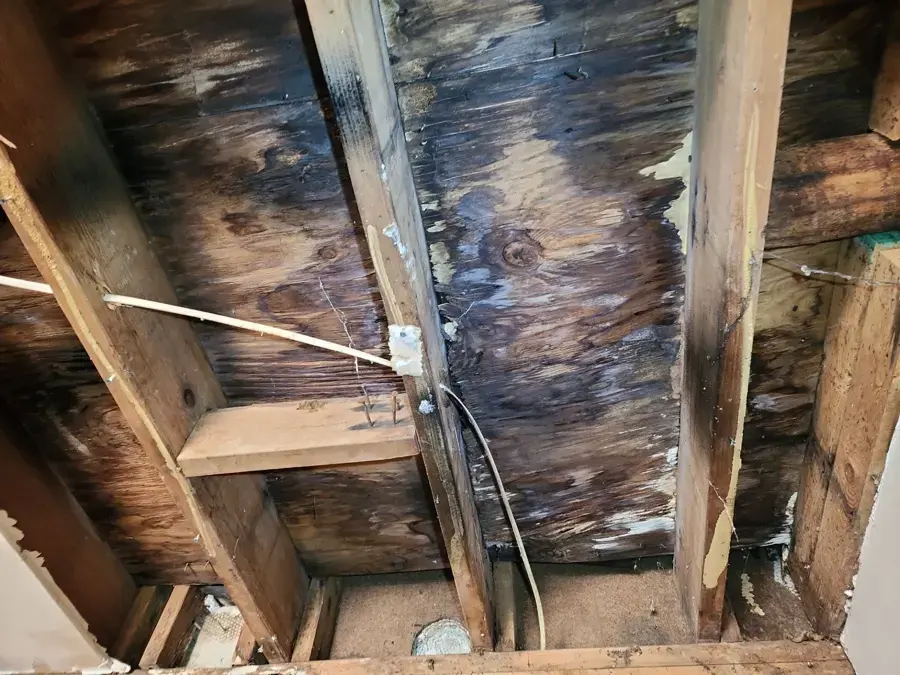
Rain enters through a damaged spot, runs along the roof decking and drips onto insulation. From there it soaks into the ceiling drywall.
Because water travels along rafters and across the top of the insulation, the stain on a ceiling often sits several feet away from the actual opening.
In an attic, water can run a long way before it drips. It follows the underside of the decking, drops onto the top of the insulation and spreads sideways, so the first sign inside the house may be a faint ring that appears days after the storm.
- A brown ring on the ceiling shows where water has pooled and dried.
- A bulge or sag means the drywall is holding water.
- Peeling paint or a musty smell can mean the leak has been present for a while.
- A stain that grows after each rain points to an opening that is still active.
What a homeowner can do right away
The goal is to limit how much more water gets in and to keep the house safe while help is arranged. Most of the work is simple and can be done from inside.
Inside the house
A ceiling that is bulging with water can hold a lot of weight, so people and furniture should stay clear of it and a professional should release it in a controlled way.
- Place buckets under active drips and move furniture and electronics out of the way.
- Turn off light fixtures and ceiling fans that sit under a wet area.
- Lift or cover rugs and flooring under the drip area so the water does not soak through.
- Photograph the stain, the room and any damaged contents.
On the roof
A roofer can tarp the damaged area. Climbing a wet roof is dangerous, so the temporary cover is best left to someone equipped for it.
A tarp is a short term fix and does not replace repairs.
What drying a roof leak involves
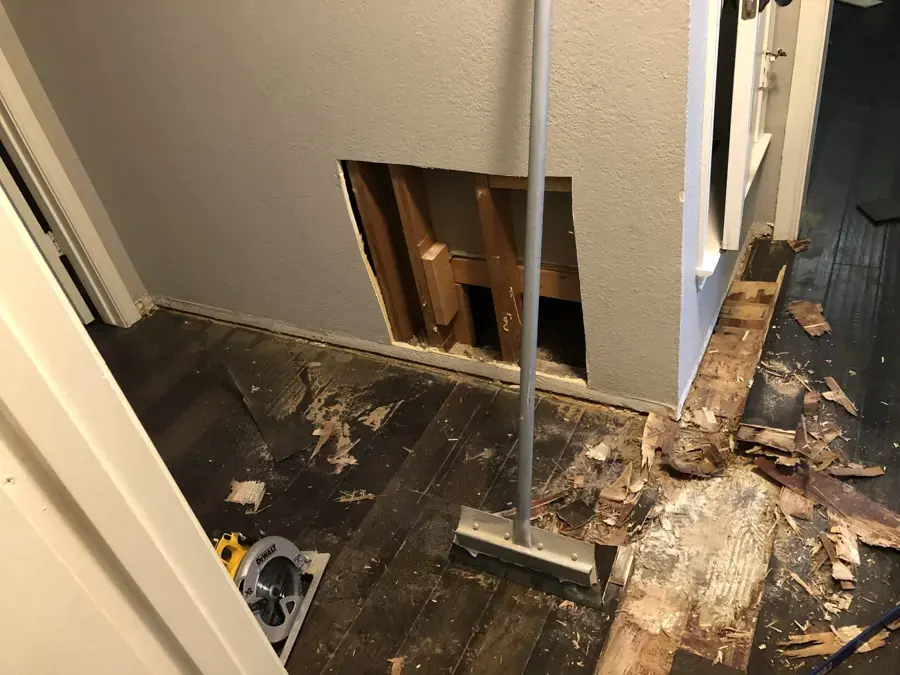
Insulation acts like a sponge, so wet batting is usually pulled out and replaced. Ceiling drywall that has sagged or stained through is cut back to dry framing.
A roof leak is often found first as a ceiling stain, and a ceiling leak job also checks the attic, wall tops and anything below the stain, because water drips and wicks well beyond the visible spot.
- Extraction of standing water from floors under the leak.
- Removal of wet insulation and damaged drywall.
- Moisture readings on framing, ceiling joists and wall tops.
- Checks for wet insulation in neighboring attic areas that were not obviously stained.
- Air movers and dehumidifiers until framing is dry.
Storm season and why timing matters
North Texas has a storm season that brings hail, strong thunderstorms and heavy rain. That is a regional pattern and not a record of any single city.
A roof that took hail damage before the next downpour is more likely to leak, so inspection soon after a hail event is worth the effort.
A quick look from the ground, followed by a check of the attic after the next rain, catches most active leaks before the ceiling shows them.
Dry first, then repair and rebuild
A roofer repairs or replaces the roof, and the restoration team dries what the leak soaked. The two jobs overlap, but sealing the roof first keeps the dry-out from starting over.
The main page for roof leak water damage covers the full process, and the page for water damage restoration in Coppell lists the other services available for a wet home.
Drying should finish before new drywall and paint go up, so moisture is not sealed into the wall.
Photographs taken before cleanup help every later decision, and a written list of damaged items keeps repairs on track.
Checks after any hail event
A short checklist after a hail storm catches slow leaks before they reach a ceiling. The same checks apply to any roof after a hard storm.
Hail is a regional threat across North Texas each spring, so the checks are worth repeating after storms that never made the news.
- Look for dented gutters, downspouts and window screens as a sign of hail strength.
- Walk the attic with a flashlight after the next rain and look for wet decking and insulation.
- Check ceilings in the rooms below the attic for new rings, bulges or peeling paint.
- Photograph any damage with a date, so repair decisions are made on the record.
Questions
Can hail damage leak weeks after a storm?
Yes. Hail can crack shingles and strip granules without making holes, and the first heavy rain afterward can then find its way into the attic.
Why is the ceiling stain not under the roof damage?
Water runs along decking and rafters and spreads across insulation before it reaches the drywall, so the stain often appears several feet from the opening.
Should a bulging ceiling be punctured?
A bulging ceiling can release a large amount of water at once. Keep people and furniture clear and let a professional release it in a controlled way.
What happened on June 6, 2018?
An early morning hail storm dropped softball sized hail on parts of Coppell and Carrollton. One Coppell homeowner was told the roof, siding and gutters needed replacement.
What gets removed after a roof leak?
Wet insulation and ceiling drywall are usually removed, and framing is dried with air movers and dehumidifiers until moisture readings return to normal.
Can a small ceiling stain be left alone?
A small ring can sit on top of a much larger wet area in the attic. Moisture readings, not the size of the stain, show how far the water went and when the equipment can come out.