Water Damage Restoration in Grapevine, TX
24/7 water damage restoration in Grapevine, TX. The restoration team pulls standing water, dries slab, framing and drywall to the IICRC S500 standard, and documents every reading for your insurance claim.
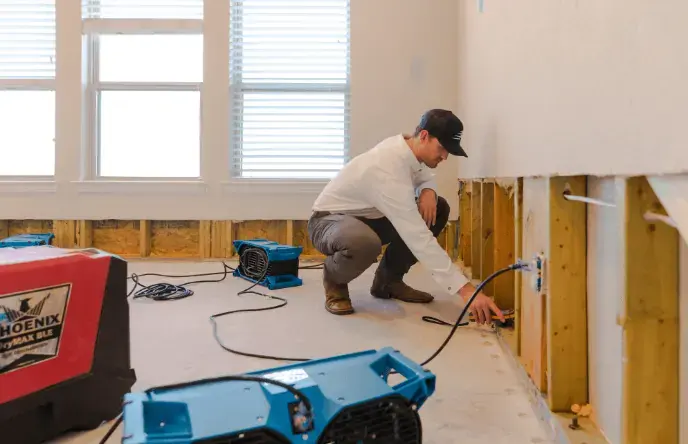
Water Damage Restoration Services in Grapevine, TX
Twelve water services, from emergency extraction to structural drying, for homes and businesses across Grapevine and northeast Tarrant County.
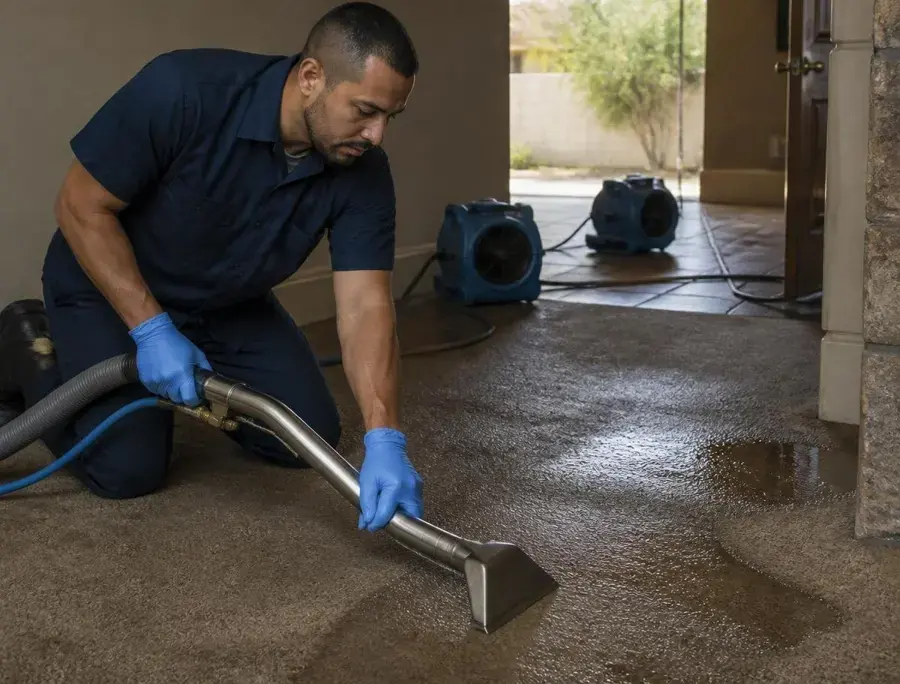
Water Extraction and Removal
Standing water pulled off carpet, tile and slab, then mapped room by room.
See the service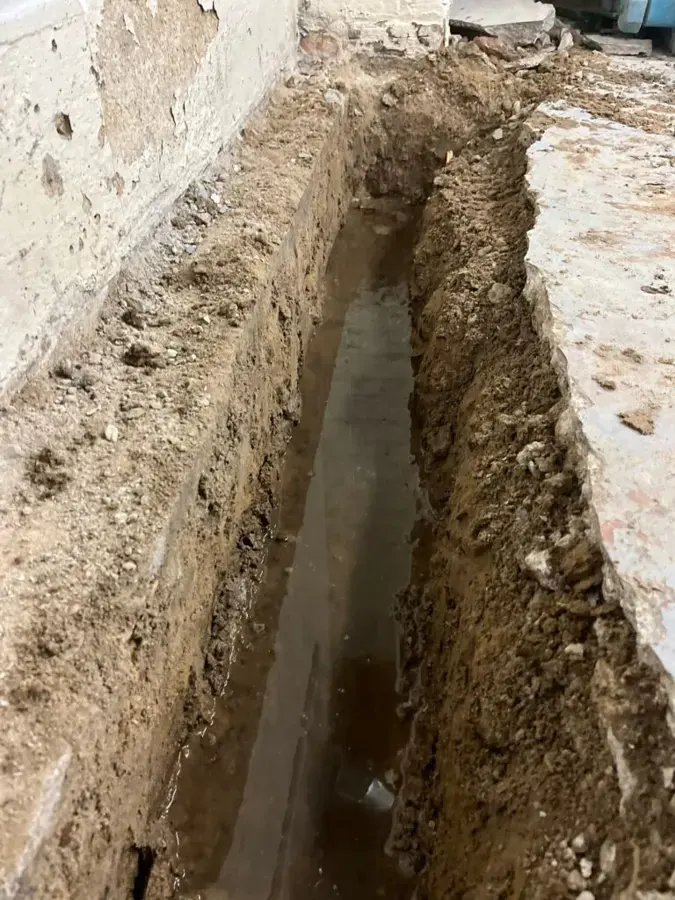
Slab Leak Water Damage
Leaks under the concrete traced, flooring lifted, slab and wall bottoms dried.
See the service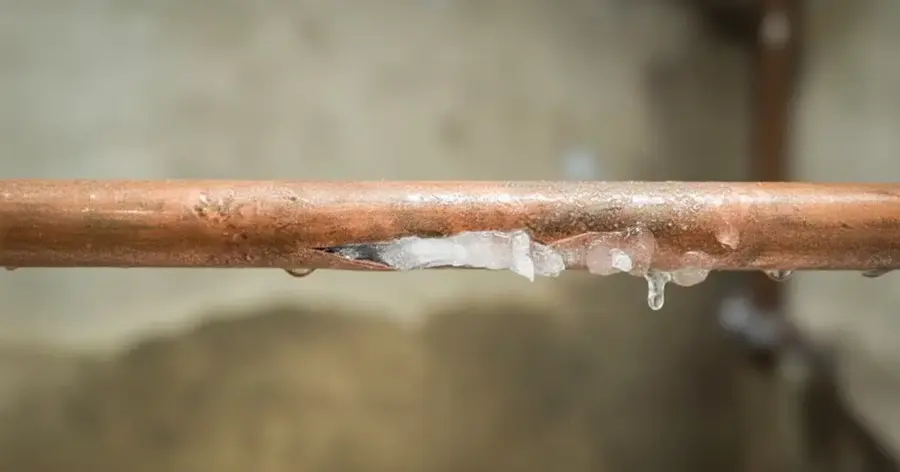
Frozen Pipe Water Damage
Pipes split by a hard North Texas freeze, dried out once the thaw sets the water loose.
See the service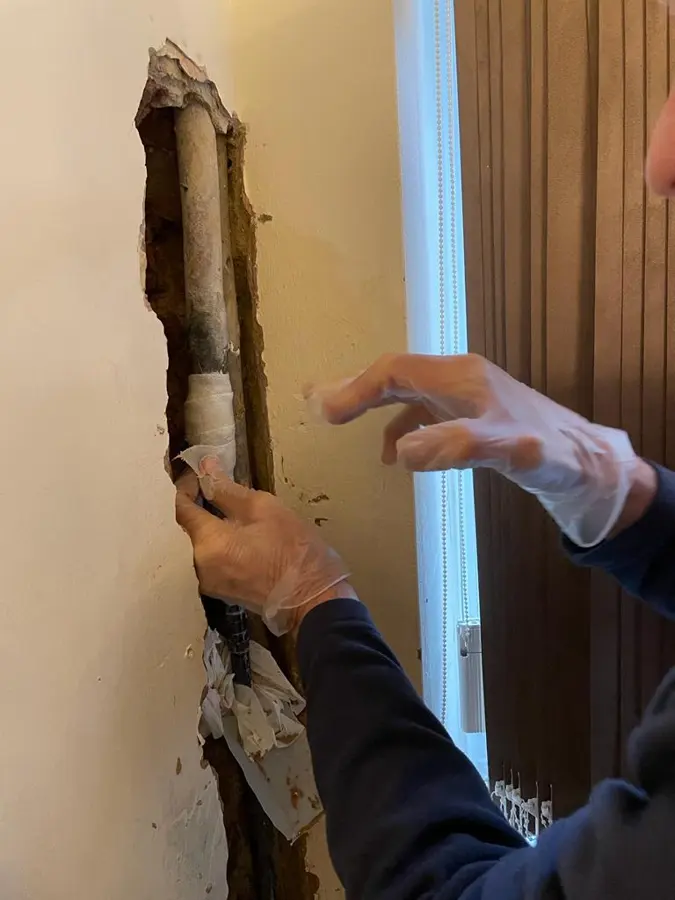
Burst Pipe Water Damage
Failed fittings, pinholes and old supply pipe inside walls and ceilings, extracted and dried.
See the service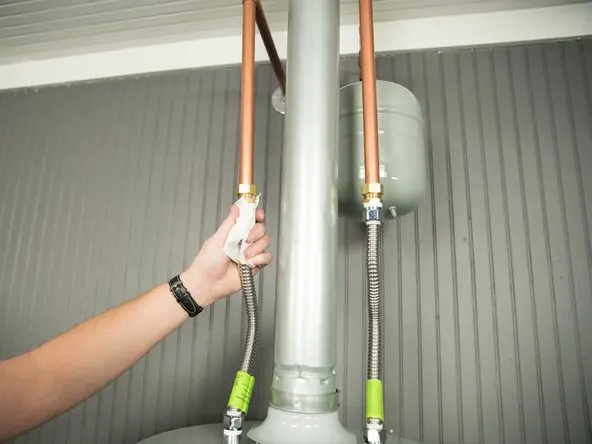
Water Heater Leak Cleanup
Attic and garage tank failures dried before ceilings, drywall and stored boxes soak through.
See the service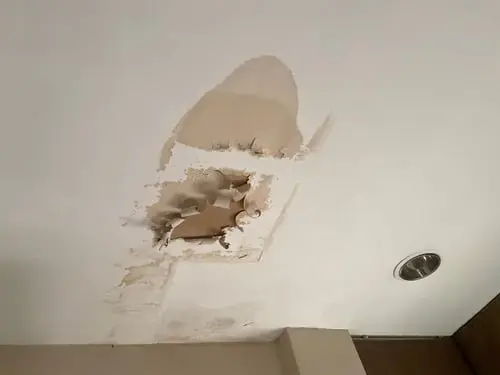
Ceiling Leak Water Damage
Upstairs baths, attic condensate drains and supply pipes traced; wet ceilings opened safely.
See the service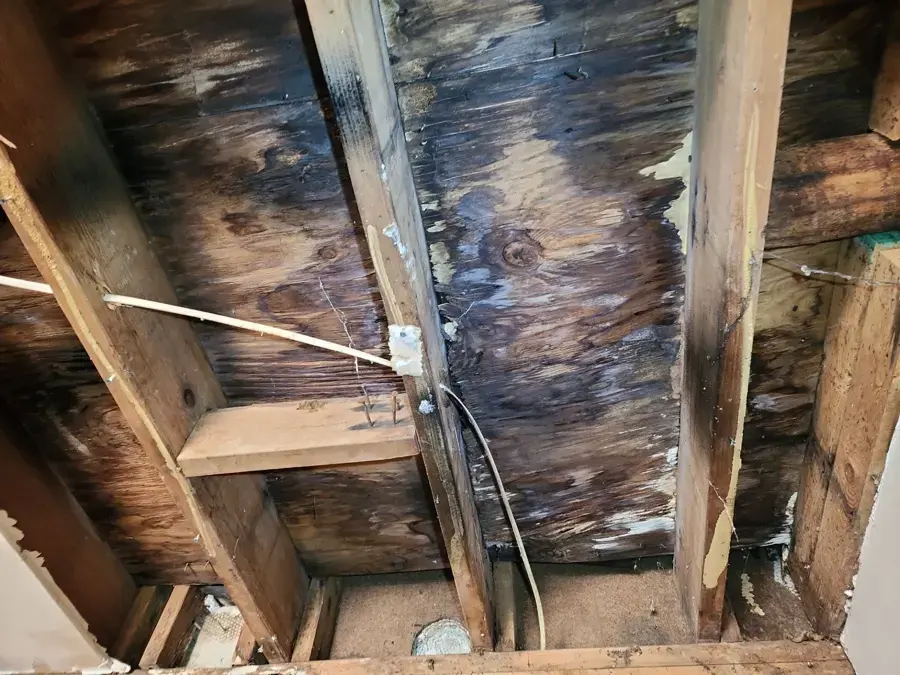
Roof Leak Water Damage
Hail-bruised shingles and failed flashing: wet insulation pulled, decking and ceilings dried.
See the service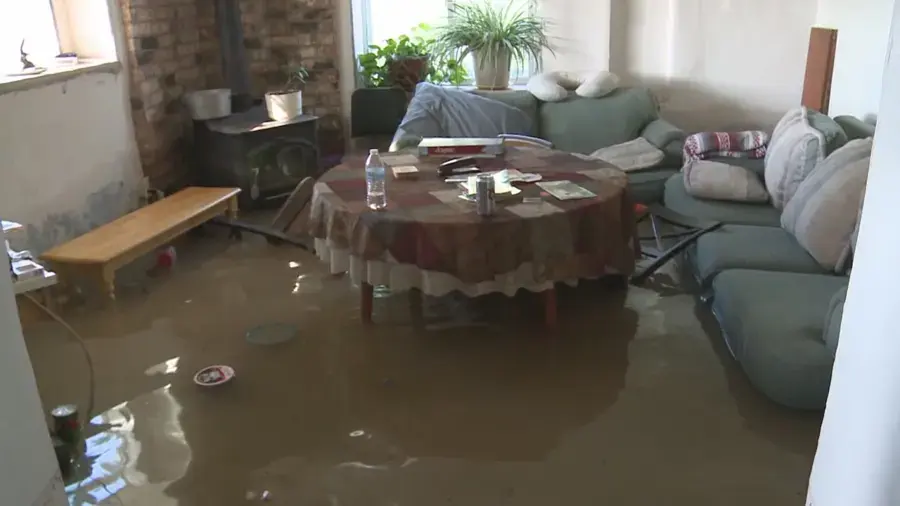
Storm and Flash Flood Cleanup
Creek overflow and storm runoff handled as Category 3, removed and dried out.
See the service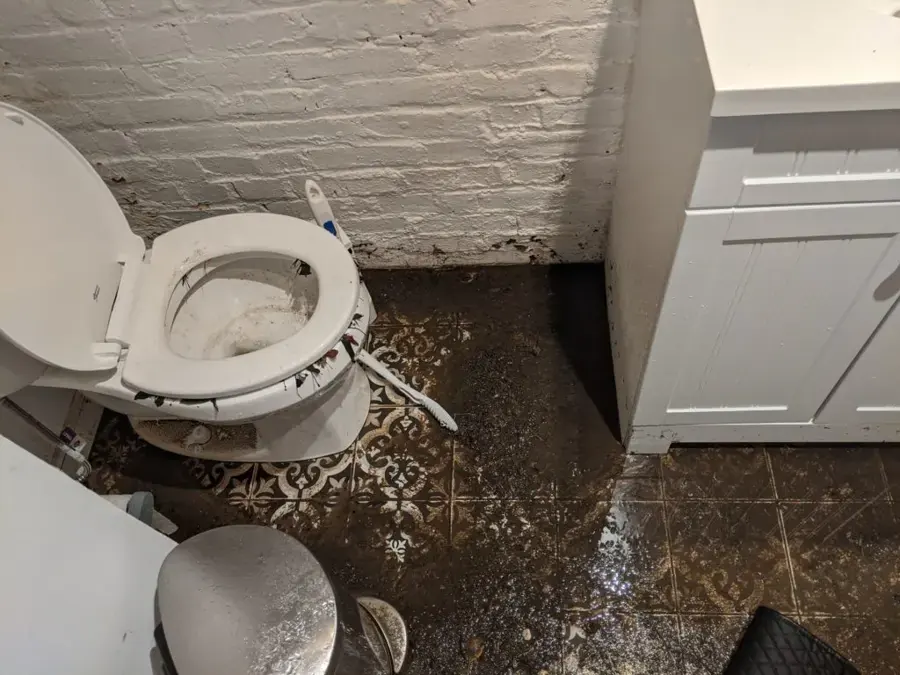
Sewage Backup Cleanup
Toilet, tub and floor drain backups contained, removed and disinfected.
See the service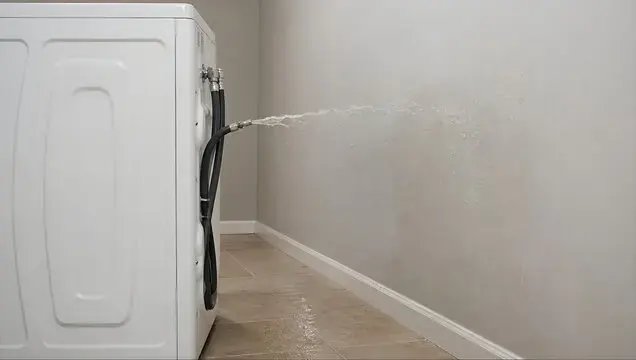
Appliance and Supply Hose Leaks
Washer, dishwasher, ice maker and toilet supply leaks pulled from floors and cabinets.
See the service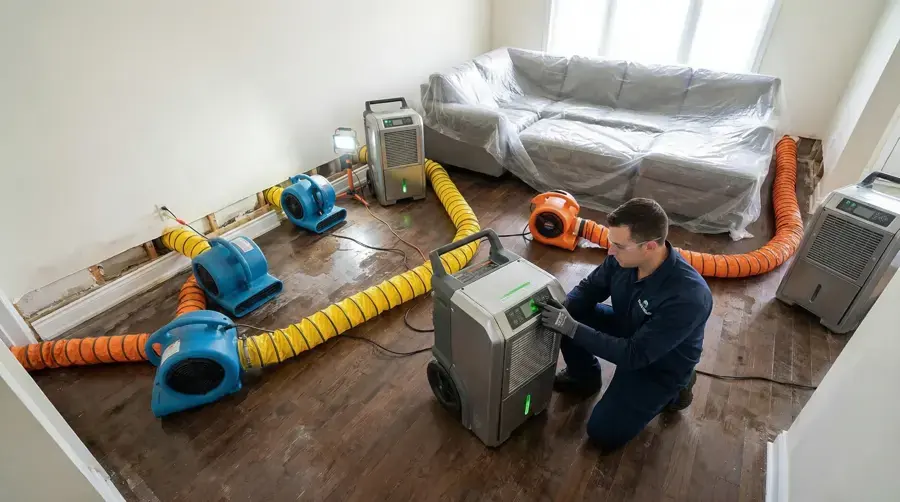
Structural Drying and Dehumidification
Framing, subfloor and slab dried to within 2 to 4 points of a dry reference.
See the service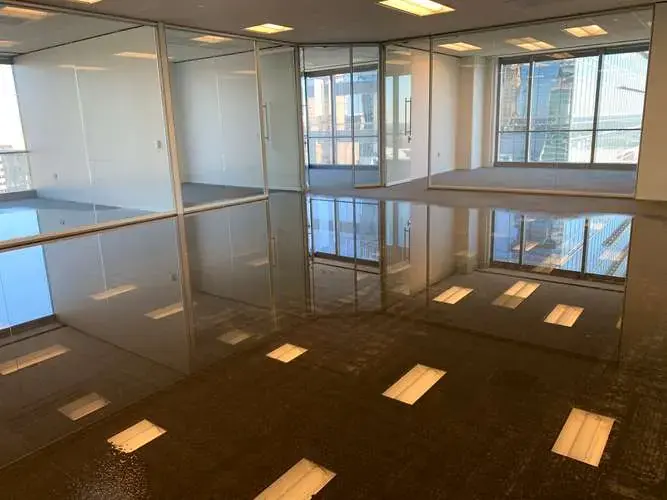
Commercial Water Damage
Hotels, restaurants, offices and shops dried in phases so business keeps moving.
See the serviceHow a water loss is handled across the city
Every dry-out runs on the same four commitments, whether the water came from a slab leak, an attic tank or a spring storm.
Rapid local response
Dispatch runs around the clock, and active water anywhere in the city is treated as urgent at any hour, weekends and holidays included.
IICRC S500 drying standard
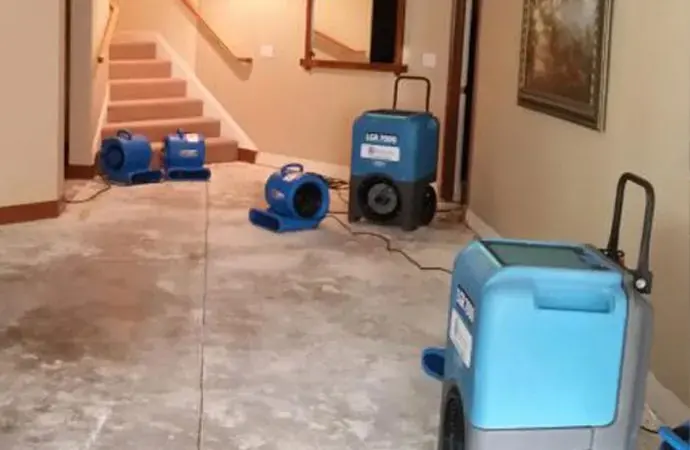
The drying team runs structural drying, not just surface drying, with air movers and LGR dehumidifiers sized to the class of loss.
Claim-ready documentation
Moisture maps, daily psychrometric logs and timestamped photos taken before any demolition go straight into the claim file.
North Texas water know-how
Slab leaks, attic water heaters, aging supply pipe and hard freezes top the local list, so the walkthrough checks the slab, the attic and the ceiling below.
What does water damage restoration cost in Grapevine, TX?
Most water damage restoration here runs $1,200 to $11,000. A contained clean-water loss sits at the low end, while sewage, outside flood water and whole-floor losses run higher.
Contained clean-water loss
- One or two rooms of Category 1 water
- Extraction and drying in place
- Daily readings until dry
Spread, hidden or overhead water
- Slab leaks and attic tank failures
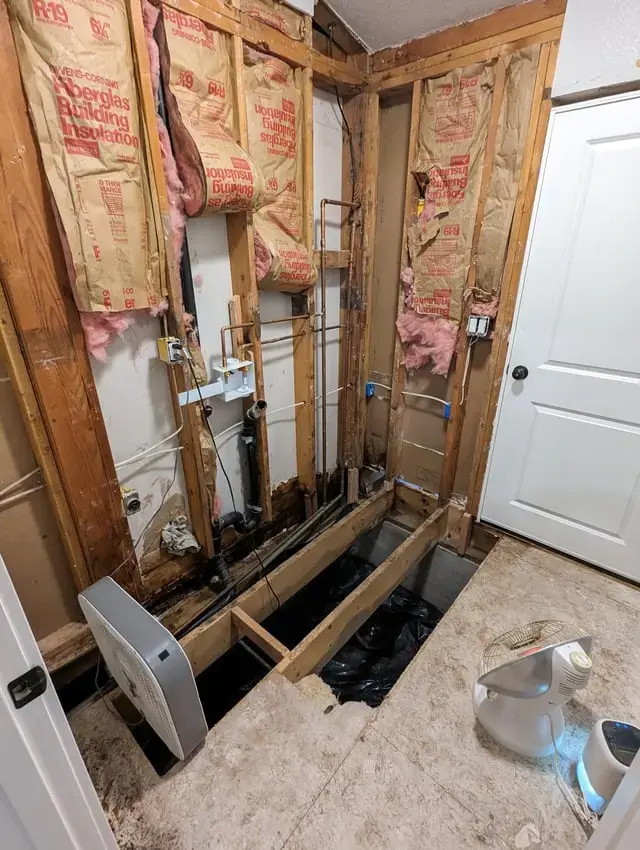
- Flooring, baseboard or drywall removed
- Several rooms under drying
Category 3 or whole-floor loss
- Sewage or outside flood water
- Containment and porous material removal
- Antimicrobial treatment before drying
Every number depends on the walkthrough: the water category, the wet square footage, the materials and the hours before drying began.
Run the Grapevine water damage cost calculatorWhat a water damage dry-out looks like in a local home
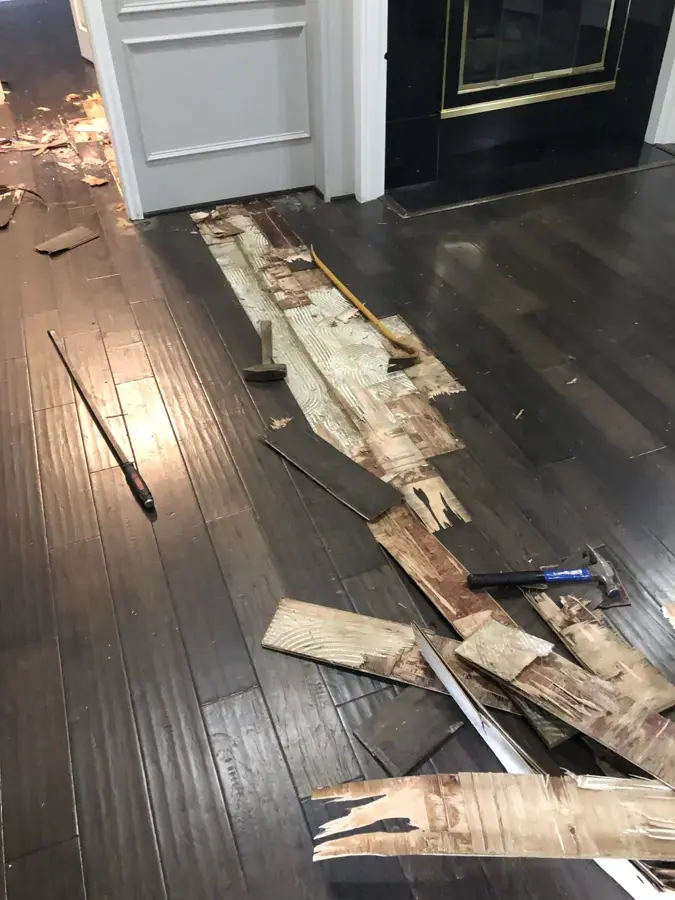
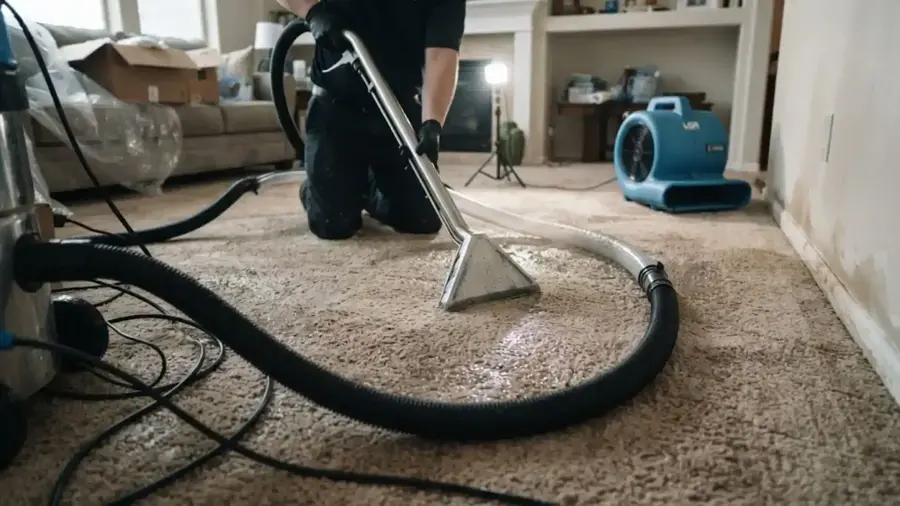
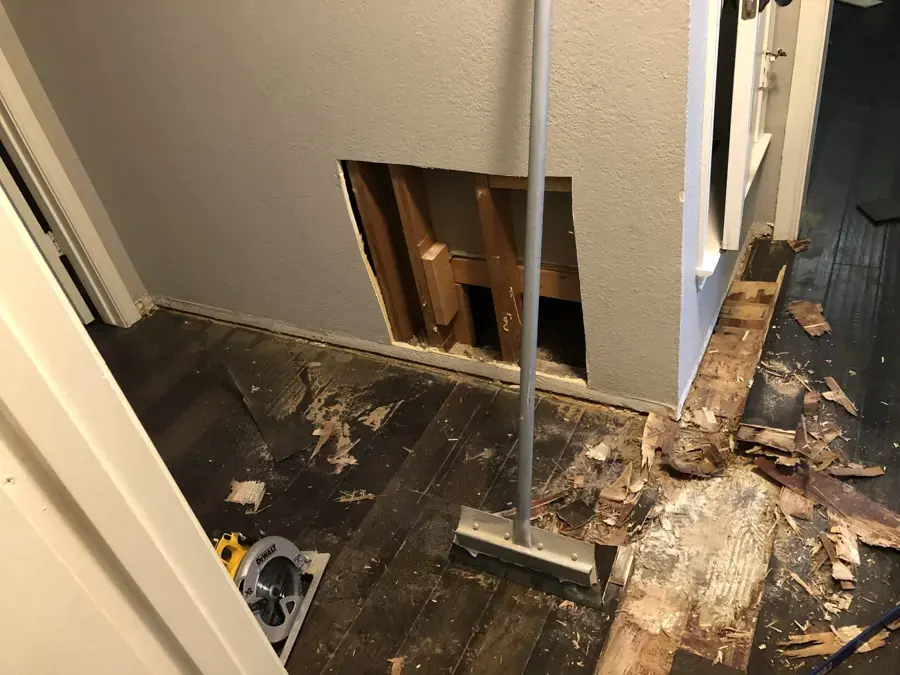
Water damage dried to the IICRC S500 standard
IICRC S500 is the industry drying standard. It sorts water by category and class, so the equipment, the removal and the drying goal match the loss instead of a guess.
Map the moisture
The tech who does the walkthrough uses thermal imaging and pinless meters to find wet slab, framing and drywall, including water hidden under flooring.
Extract the water
The extraction crew pulls standing water with truck-mounted and portable units, since removing liquid water is far faster than drying it.
Set the drying
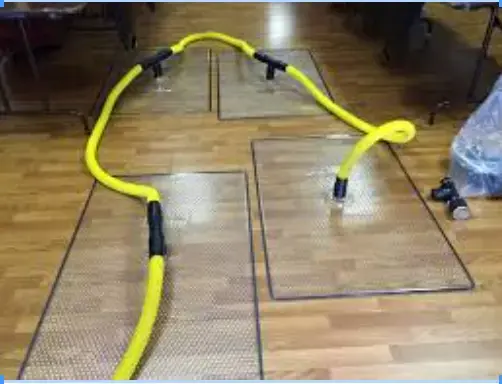
The drying team places air movers and LGR dehumidifiers to match the class of loss and opens drywall only where readings call for it.
Verify dry
Readings are logged daily, and equipment leaves only when materials read within 2 to 4 points of a dry reference.
Documentation for your insurance claim
An adjuster pays on evidence. The restoration team builds the claim file while the work happens, not after it.
- A moisture map of every wet room, marked before any equipment goes down
- Daily psychrometric drying logs with temperature, humidity and material readings
- Timestamped photos of the damage and of each material before it is removed
- The water category and class of loss, recorded at the first walkthrough
- A line-item scope of the extraction, removal and drying work
Coverage depends on your policy
Most homeowners policies treat a sudden, accidental leak, such as a burst pipe or a failed water heater, differently from outside flood water, which usually needs a separate flood policy.
Check with your own insurer about what your policy covers. The restoration team documents the loss either way.
The equipment behind a dry-out
- Truck-mounted extraction. Pulls standing water off carpet, tile and slab far faster than portable units.
- LGR dehumidifiers. Low grain refrigerant units keep pulling moisture from humid North Texas air; desiccant units handle dense Class 4 materials.
- Air movers. Set to each room's evaporation load, not just aimed at the floor.
- Thermal imaging and pinless meters. Find water behind drywall, under flooring and above the ceiling before anything gets torn out.
One call reaches water damage pros, 24/7
Local water damage pros cover every neighborhood, from Historic Main Street to Silver Lake Estates and the south side near Glade Road.
Describe what is wet and where the water came from, and the response team gets extraction moving.
Start water removal in GrapevineEmail for questions that can wait: contact@
Water damage service across Grapevine and northeast Tarrant County
Neighborhoods and corridors
Nearby cities
What to do while the water is still moving
- Shut off the water. Close the main shutoff, or the valve on the tank or fixture, if it is safe to reach.
- Cut power to wet rooms. Switch off the breaker for any room where water touches outlets or cords.
- Lift what you can. Get rugs, boxes and furniture off wet floors, and set foil under legs that stay.
- Photograph everything first. Pictures of the water and the damage, taken before cleanup, help the claim file.
- Call for extraction. The sooner standing water comes out, the less ends up in the slab edge, drywall and framing.
All water damage categories covered
Clean, gray or black, each category of water gets a different response under the IICRC S500 standard.
Category 1, clean water
From a supply pipe, a slab leak, a water heater or a frozen pipe. Extracted and dried in place before it sits long enough to turn dirty.
See water extractionCategory 2, gray water
From a washing machine, a dishwasher or an AC condensate drain. Wet pad comes out and surfaces get an EPA-registered antimicrobial.
See appliance leak cleanupCategory 3, black water
Sewage backups and outside flood water. Handled with containment, removal of porous materials and disinfection.
See sewage backup cleanup
Why water damage hits local homes the way it does
A few local facts shape most water losses in the area.
- Slab homes from the 1970s to the 1990s. Most houses in town sit on concrete slabs with supply pipe under or through the slab, so a leak can soak flooring before anyone sees water.
- North Texas clay. Clay soils swell when wet and shrink when dry, and a slab moves with them, which stresses pipe where it passes through concrete.
- Attic tanks and air handlers. Many North Texas homes put the water heater and the air handler in the attic, so a failed tank or a clogged condensate drain shows up as a ceiling stain.
- Rare but hard freezes. DFW Airport fell to 2 degrees below zero on February 16, 2021, and the city's water use hit 20 million gallons that day against a normal winter day of about 5 million.
- Spring storms and two drainages. Hail and downpours arrive in spring. The north side drains to the lake, Denton Creek and Cottonwood Branch, and the south side drains to Big Bear and Little Bear Creek.
Spillway flow, May 2015. Lake Grapevine topped its spillway on May 31, 2015, the fourth time in its history, and crested at 561.55 feet against a normal pool of 535 feet. Water closed a section of Dove Road in the northwest part of town.
Common water damage questions
Water spreading in your home right now?
Skip the reading for now. Dispatch never closes, and active water is treated as urgent at any hour.
(888) 527-9134 Start the Grapevine water removalHow fast can someone respond to water damage locally?
Dispatch runs 24/7, and active water anywhere in the city is treated as urgent, nights, weekends and holidays included. The response team sets extraction in motion as soon as the details are in, because standing water keeps soaking into slab edges and drywall until it is pulled out.
Is water damage covered by homeowners insurance in Texas?
A sudden, accidental loss, such as a burst pipe or a failed water heater, is often covered after the deductible, while outside flood water usually needs a separate flood policy. The restoration team documents the loss with moisture maps, daily logs and photos. Coverage depends on your policy, so check with your own insurer.
Why are slab leaks so common in this area?
Most homes here sit on concrete slabs with supply pipe running under or through them, and North Texas clay moves the slab as it swells and shrinks. A warm spot on the floor, a jump in the water bill or a meter that keeps moving with every tap off points to a leak. The slab leak water damage service covers how the flooring and slab get dried.
What should I do first while the water is still spreading?
If it is safe, shut off the main or the valve feeding the leak, then switch off the breaker for any wet room. Move what you can off the floor and photograph the damage before cleanup. Then call, because the sooner extraction starts, the less water ends up inside the walls.
How long does it take to dry a water-damaged room?
A contained Class 1 loss usually dries in three to five days when drying starts quickly. Hardwood, plaster and a wet slab take longer, and humid spring weather slows evaporation. The drying time estimator gives a typical window for your situation.
Does drywall have to come out after a leak?
Not always. Drywall wet with clean water can often be dried in place with air movers and dehumidifiers when drying starts quickly. Drywall touched by sewage or outside flood water is cut out above the water mark, and so is any section that stays wet after drying.
What happens when a frozen pipe thaws?
Ice holds a split closed while the pipe is frozen, so the leak often starts at the thaw, inside an attic, a ceiling or an exterior wall. Shut the main as soon as water appears. The pipe freeze risk check helps before the next hard freeze.
Why is sewage cleanup handled differently from a clean water leak?
Sewage is Category 3 water from the moment it backs up. The crew works in protective gear, removes the carpet, pad and drywall the water touched, and treats the area with an EPA-registered antimicrobial before drying.
How is the cost of water damage restoration figured?
Cost follows four things: the water category, the wet square footage, the material class and how long the water sat. The water damage cost calculator shows a typical range before the walkthrough.
Water damage in Grapevine? Call before it spreads.
Standing water keeps moving into slab edges, baseboards and drywall until it is extracted. Local water damage pros work 24/7, and the restoration team extracts, dries and documents the loss from the first call.
(888) 527-9134Talk to Grapevine water removal now